
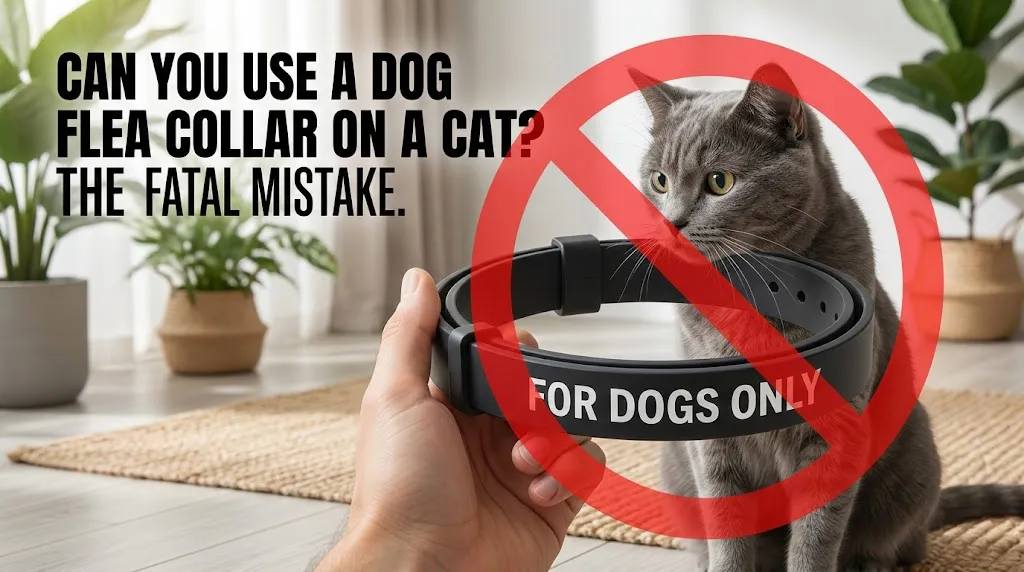
Imagine this scenario: You’ve just noticed your cat scratching relentlessly. You don’t have a cat flea treatment on hand, but you do have a spare flea collar left over from your dog. They both kill fleas, right? So, can you use a dog flea collar on a cat to save time and money?
The answer is a resounding, absolute NO.
Putting a dog flea collar on a feline friend isn’t just a bad idea—it is a fatal mistake. Dog flea and tick preventatives contain active ingredients that are highly toxic to cats. In this guide, we will break down exactly why you should never mix pet medications, the warning signs of poisoning, and the safest eco-friendly alternatives to keep your cat pest-free.
The Silent Killer: Permethrin Toxicity in Cats
The primary reason dog flea collars are deadly to cats comes down to a chemical called Permethrin (or other pyrethrin-based insecticides).
Permethrin is a synthetic chemical widely used in dog flea collars, spot-on treatments, and household bug sprays. While a dog’s liver can safely process and break down this chemical, a cat’s liver cannot. Cats completely lack a specific liver enzyme called glucuronidase, which is necessary to metabolize permethrin.
Because they can’t process it, the chemical builds up rapidly in their bloodstream and directly attacks their central nervous system. Even a tiny amount of permethrin exposure from a dog collar can cause severe neurological damage or death in cats within hours.
3 More Reasons Never to Swap Collars
Even if you find a dog collar that claims to be “permethrin-free,” you should still never use it on your cat. Here is why:
1. Massive Dosage Differences
Dogs are generally much larger than cats. A flea collar designed for a 50-pound dog contains a heavily concentrated dose of medication. Putting that same concentration around the neck of a 10-pound cat results in a massive, life-threatening overdose.
2. Fastidious Grooming Habits
Cats are obsessive groomers. When a dog wears a flea collar, the chemicals spread over their skin and coat. Dogs don’t lick their entire bodies, but cats do. If a cat wears a dog collar, the toxic chemicals rub onto their fur, which they will inevitably lick off and ingest directly into their digestive system.
3. The Lack of a Breakaway Feature
From an environmental and physical safety standpoint, collars are risky for cats. Cats love to climb trees, jump on furniture, and squeeze into tight spaces. Cat-specific collars are built with a “breakaway” safety buckle that snaps open under pressure, preventing the cat from choking if the collar gets caught. Dog collars do not have this feature, posing a severe strangulation hazard.
Warning Signs: Symptoms of Dog Flea Medicine Poisoning
If a cat is accidentally exposed to a dog flea collar, the symptoms of toxicity will usually appear within a few hours. Watch for these critical warning signs:
- Excessive Drooling: Heavy foaming at the mouth or uncontrollable drooling.
- Muscle Tremors: Uncontrollable shaking, twitching (especially in the ears or paws), or full-blown seizures.
- Loss of Coordination (Ataxia): Stumbling, walking like they are drunk, or an inability to stand up.
- Gastrointestinal Distress: Sudden vomiting or diarrhea.
- Lethargy or Agitation: Extreme hiding, unusual aggression, or breathing heavily.
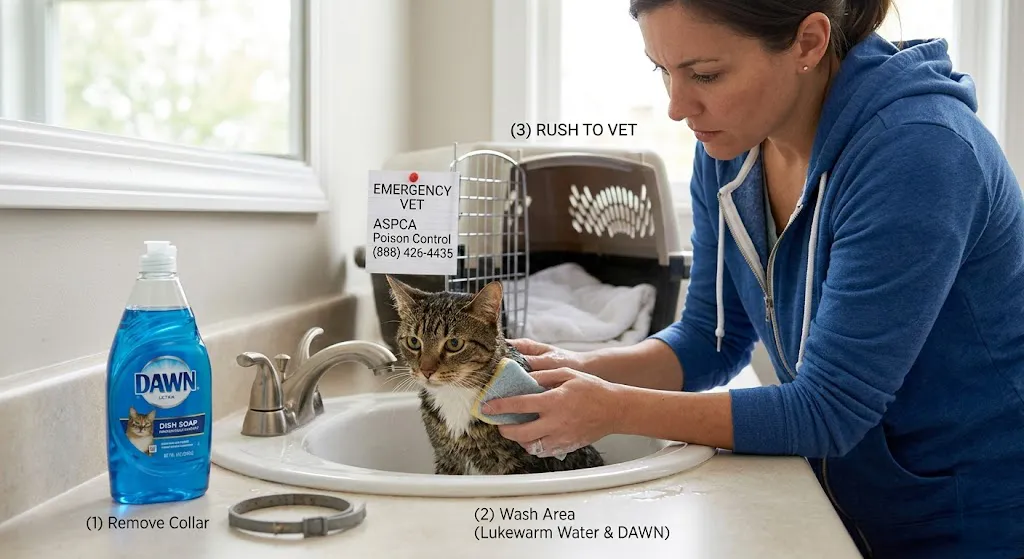
Emergency Steps: What to Do If Your Cat Is Exposed?
If you realize your cat is wearing a dog flea collar, or if they accidentally snuggled up against a dog wearing a wet spot-on treatment, act immediately:
- Remove the Collar: Take the collar off the cat instantly.
- Wash the Area: Use lukewarm water and a mild, pet-safe liquid dish soap (like Dawn) to gently wash the cat’s neck and body. This helps strip the toxic oils from their skin. Do not use harsh chemical shampoos.
- Rush to the Vet: Do not wait to see if symptoms improve. Call your emergency veterinarian or the ASPCA Animal Poison Control Center immediately. Time is critical, and they will likely need IV fluids and muscle relaxants.
Eco-Friendly & Safe Flea Prevention Alternatives
You don’t need harsh, life-threatening chemicals to keep your cat safe from fleas. Here are the best, vet-approved, and natural alternatives:
- Cat-Specific Preventatives: If you prefer collars, only buy vet-approved collars explicitly labeled for cats (like the Seresto Cat Collar), which use feline-safe dosages and feature breakaway safety clips.
- The Trusty Flea Comb: The most eco-friendly, zero-waste, and chemical-free way to manage fleas is daily combing. Dip the comb in a bowl of soapy water after each swipe to trap and drown the fleas.
- Food-Grade Diatomaceous Earth (DE): DE is a natural, powdery substance made from fossilized algae. You can sprinkle a light dusting on your carpets and pet bedding to naturally dry out and kill fleas. Note: Always buy “Food-Grade” DE and avoid creating dust clouds, as inhaling the powder can irritate your cat’s lungs.
- Environmental Control: Fleas spend 90% of their lifecycle off your pet. Vacuuming your floors daily and washing your cat’s bedding in hot water weekly is a highly effective, non-toxic way to break the flea lifecycle.
The Bottom Line
Trying to save a few dollars or a trip to the store by using a dog flea collar on a cat is a fatal mistake. Your cat’s safety should always come first. Always read labels carefully, stick to cat-specific products, and whenever possible, opt for natural, eco-friendly pest control methods to keep your home safe for everyone in it.