
You wake up in the morning, stretch, and walk down the hall. But as you pass the bathroom, you stop dead in your tracks.
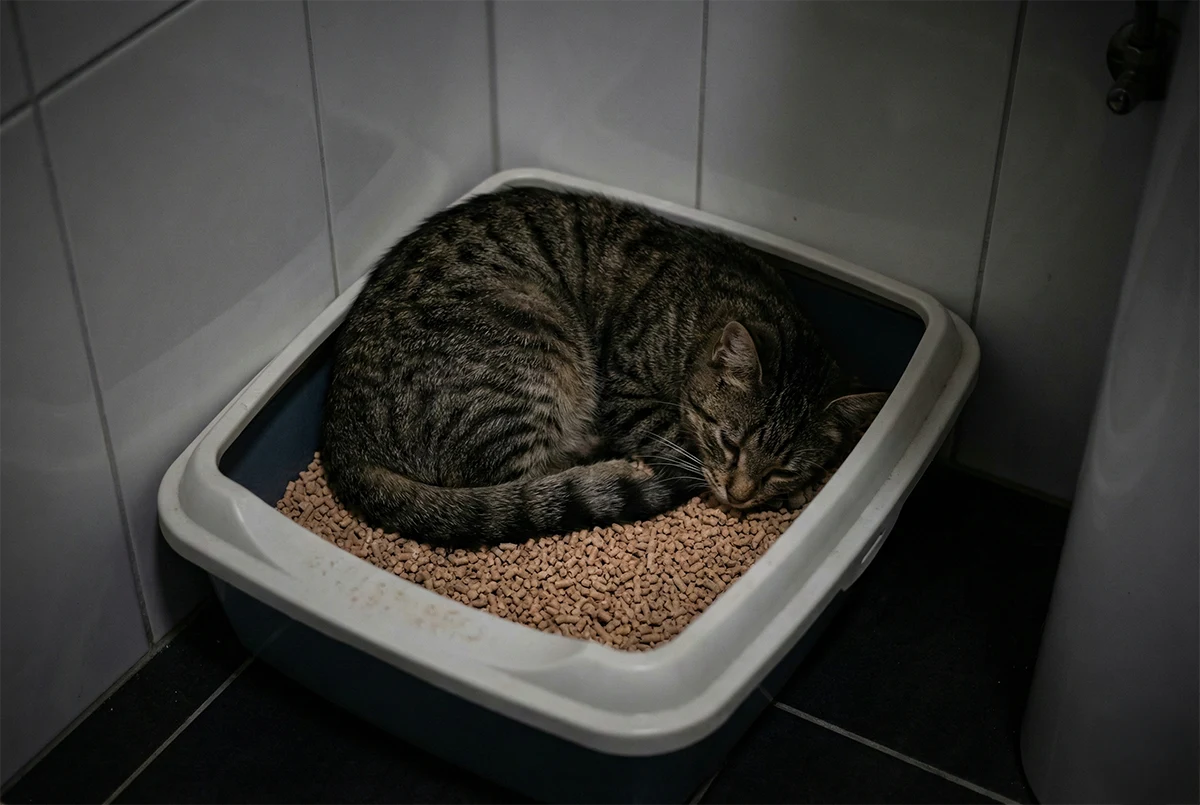
There, curled up tightly in the corner of the litter box, is your beloved cat. She is fast asleep, resting her head on the litter granules as if they were a plush memory foam pillow.
Your first reaction is probably, “Eww, gross!” followed quickly by, “Wait… is she okay?”
We know that cats are famous for sleeping in weird places—cardboard boxes, sinks, laundry baskets, and even on your laptop keyboard. But the litter box? That is not a normal nap spot.
In the feline world, sleeping in the toilet is rarely just a “quirk.” It is a massive red flag. It is a cry for help, signaling that something is wrong either physically (illness) or emotionally (fear).
In this guide, we will break down the urgent medical signs you need to look for, the psychological reasons behind this behavior, and how to get your kitty back into a clean, cozy bed.
The Golden Rule: Medical vs. Behavioral
Before we dive into the specific reasons, you need to understand one crucial distinction.
- Sudden Change (Medical Emergency): If your cat has always slept on the sofa and suddenly starts sleeping in the litter box today, assume it is a medical emergency. Go to the vet immediately.
- Habitual/New Cat (Behavioral): If you just adopted a shelter cat or kitten yesterday, this is likely a behavioral response to fear or trauma.
Medical Reasons (The “Run to the Vet” Signs)
Cats are masters of disguise. They don’t whine or cry when they are in pain; they hide. And sometimes, the “safest” place to hide is the litter box.
Urinary Tract Infections (UTI) & Crystals
This is the #1 medical culprit. If your cat has a UTI, bladder stones, or crystals, urinating becomes painful and frequent. They may feel the urge to pee constantly. Because they are afraid they won’t make it to the box in time, they decide to simply stay in the box. It’s a tragic logic: “I need to pee every 5 minutes, so I’ll just sleep here.”
Kidney Disease
In older cats, kidney disease can make them feel nauseous, lethargic, and dehydrated. They might be too weak to walk back and forth between the water bowl and the litter box, so they collapse in the box to conserve energy.
The “Cooling Effect” (Fever)
Clay litter is naturally cool to the touch. If your cat has a high fever or is suffering from heatstroke, they might seek out the litter box purely for temperature regulation. They are trying to cool down their overheating body against the clay.
Arthritis (Mobility Issues)
For a senior cat with stiff joints, climbing in and out of a high-sided litter box is a painful workout. Once they manage to climb in to do their business, the thought of climbing back out might be too daunting. So, they just lie down.
Watch: Vet Explains Why Cats Sleep in Litter Boxes
🚨 The Symptom Checklist (Do This Now)
If you find your cat sleeping in the litter box, check for these signs immediately:
- [ ] Straining: Is she hunching over, but nothing is coming out?
- [ ] Crying: Is she meowing while in the box?
- [ ] Blood: Is there any pink or red tint in the urine?
- [ ] Lethargy: Is she refusing to eat or play?
- [ ] Hiding: Is she avoiding you?
Verdict: If you checked ANY of these boxes, stop reading and go to the vet. A blocked urethra (especially in male cats) can be fatal within 24–48 hours.
Psychological Reasons (Stress & Safety)
If the vet gives your cat a clean bill of health, the problem is in their head. The litter box has become their emotional fortress.
The “Safe Zone” Theory
Think about the design of a litter box: it usually has high walls on three sides and smells strongly of them. In the wild, cats are vulnerable when they sleep. To a scared cat, the litter box feels like a bunker. It smells familiar (marking their territory), and the walls protect them from being ambushed from behind.
Multi-Cat Bullying
Do you have other cats? Watch closely. Sometimes, a dominant cat will “guard” the hallway or the bedroom, blocking the shy cat from accessing the rest of the house. The shy cat retreats to the litter box because it’s the only place the bully hasn’t claimed, or simply because they are hiding.
The “Shelter Cat” Syndrome
If you recently adopted a cat from a shelter, sleeping in the litter box is heartbreakingly common. In a small shelter cage, the litter box was often the only furniture they had. It was their bed, their chair, and their toilet all in one. Old habits die hard. It may take weeks for them to realize they now have a safe home with real beds.
Pregnancy and Nesting
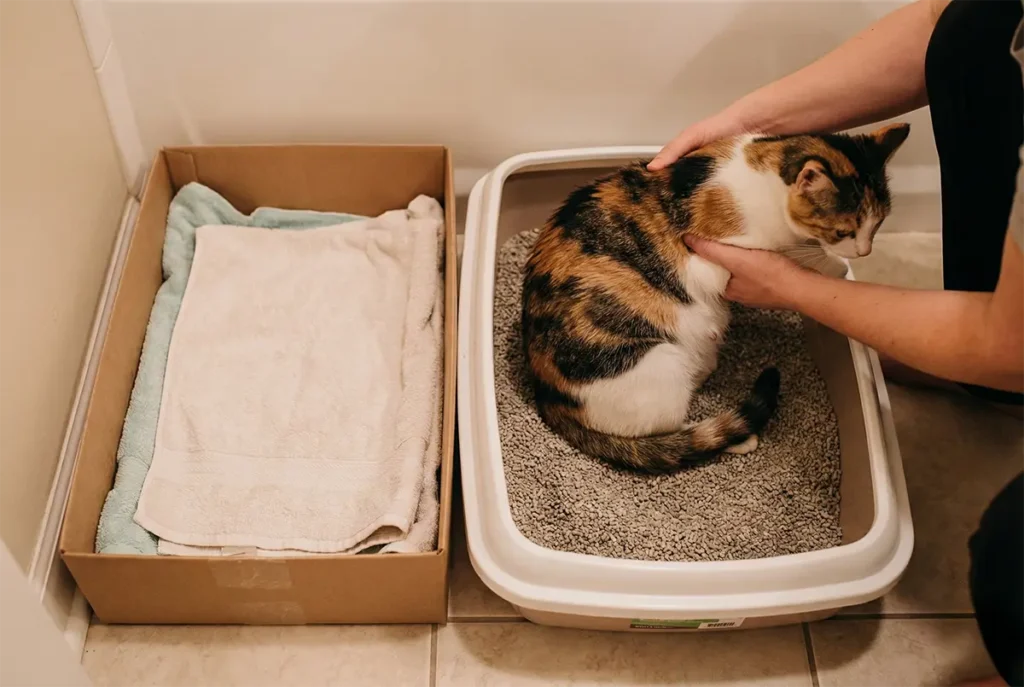
If your female cat is unspayed and pregnant, she will look for a private, secure place to give birth (queening). The litter box is secluded, smells like her, and has “diggable” material. To her motherly instincts, this seems like a safe nest for her kittens. (Note: Please get them out of there! Clumping litter can be dangerous for newborn wet kittens. Create a separate nesting box with towels.)
The Senior Cat Factor (Dementia)
Just like humans get Alzheimer’s, geriatric cats can suffer from Feline Cognitive Dysfunction (FCD). A confused senior cat might forget where their bed is. Or, they might get confused about the purpose of the litter box. They see a soft-ish, contained space and think, “This looks like a bed.”
Senior cats often struggle with mobility. Consider switching to a low-entry box or using safer litter. (Read more: Wood Pellet Cat Litter Pros and Cons.
How to Stop Your Cat from Sleeping in the Litter Box
Once you’ve ruled out medical issues, use these EcoPawsible steps to reclaim their bed.
Step 1: Upgrade Their “Safety” Options
If they are sleeping there for protection, give them a better fortress.
- The Cardboard Therapy: Take a clean cardboard box, turn it on its side, and put a fuzzy blanket inside. Place it near the litter box (but not too close). This mimics the “enclosed” feeling of the litter box but is clean and warm.
- Vertical Space: Cats feel safer when high up. Invest in a cat tree or clear a shelf for them.
Step 2: Address the Bully
If another cat is the problem, you need to increase the resources. Follow the “N+1 Rule”: If you have 2 cats, you need 3 litter boxes, 3 food bowls, and multiple sleeping spots. This stops the resource guarding.
Step 3: For Senior Cats
Switch to a low-entry litter box (or cut a doorway into a plastic storage bin). Place comfortable, heated beds in easily accessible spots so they don’t have to climb to sleep.
Step 4: Keep It Clean (Hygiene Risk)
While you work on the behavior, ensure the litter box is pristine. Sleeping in dirty litter can cause skin infections and respiratory issues.
- Scoop twice a day.
- Consider using Wood Pellet Litter or other natural options that are less dusty than clay, reducing the risk if they breathe it in while sleeping.
FAQ: Litter Box Behavior
Q: Is it normal for kittens to sleep in the litter box?
A: Occasionally, yes. Kittens are goofy. They play hard and crash hard. Sometimes they just fall asleep mid-play in the box. As long as they seem healthy otherwise, they usually grow out of it.
Q: Can a dirty litter box make my cat sick if she sleeps in it?
A: Yes. Bacteria from feces can cause skin infections, and the ammonia fumes from urine can irritate their lungs and eyes.
Q: Why does my cat lay IN FRONT of the litter box?
A: This is often “guarding” behavior (preventing other cats from using it) or waiting for you to clean it.
Final thoughts
Seeing your cat sleep in the litter box is alarming, and rightly so. It is not a cute quirk; it is a conversation your cat is trying to have with you.
Whether she is trying to tell you, “I physically hurt,” or “I am terrified of the new dog,” she is retreating to the only place that feels safe.
Your job is to be the detective. Start with the vet check—always. Once the medical “all-clear” is given, shower her with patience, offer better hiding spots, and show her that she doesn’t need a shield to be safe in your home.
⚠️ Medical Disclaimer
Please Note: We are passionate researchers at EcoPawsible, but we are not veterinarians. If your cat is straining to urinate, crying in the box, or hiding, this could be a life-threatening blockage. Please consult a veterinarian immediately.