We all know the rule for ourselves: drink eight glasses of water a day. But when was the last time you saw your cat actually drink from their bowl?
If the answer is “rarely,” you are not alone.
Unlike dogs, who lap up water noisily after a walk, cats are notoriously bad at hydrating themselves. This isn’t just stubbornness; it’s biology. Domestic cats evolved from the African Wildcat, a desert dweller designed to get most of its moisture from eating prey (like mice and birds) rather than drinking from pools.
However, modern house cats don’t eat fresh mice; they eat dry kibble. This biological mismatch often leads to chronic, low-level dehydration, which can quietly damage their kidneys over time.
So, why isn’t your cat drinking, and when does it become a medical emergency? Here is a deep dive into the causes of dehydration and how to keep your kitty healthy.
1. The Diet Dilemma: Dry Food vs. Wet Food
The most common cause of dehydration isn’t a disease—it’s the menu.
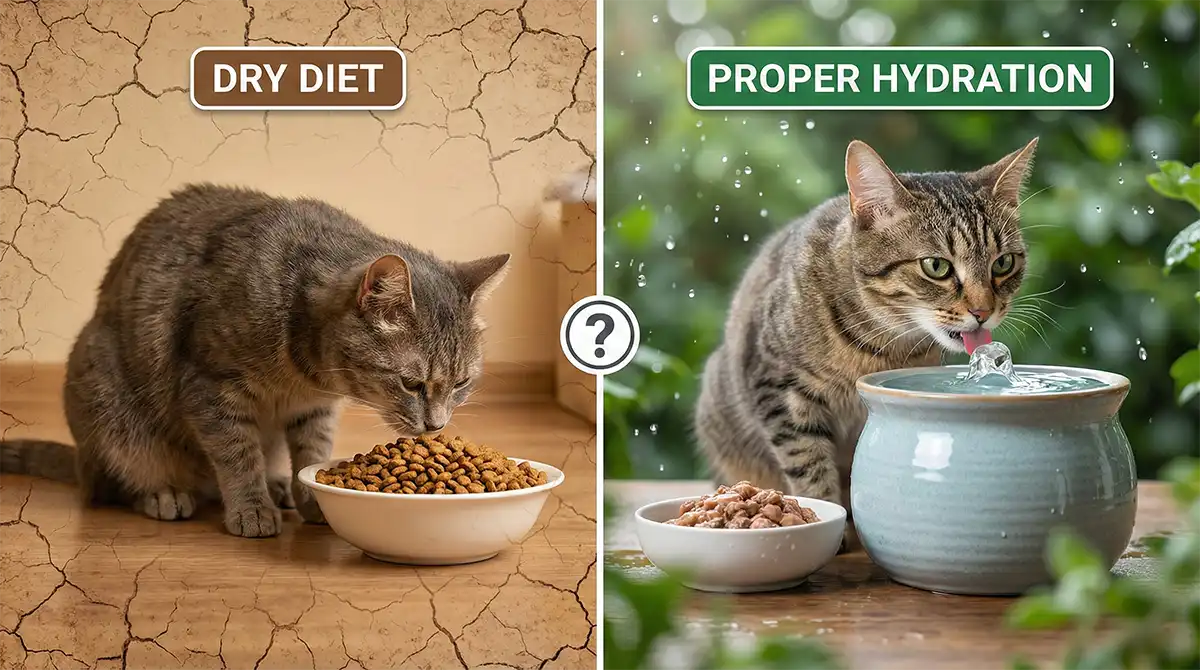
In the wild, a cat’s natural diet consists of prey that is about 70% to 80% water. In contrast, the average bag of dry kibble contains only 5% to 10% water.
When a cat eats only dry food, they need to drink a significant amount of water to make up the difference. Unfortunately, because their “thirst drive” is naturally low, most cats simply don’t drink enough to compensate. Over years, this chronic lack of moisture can strain the kidneys and lead to concentrated urine.
Note: When a cat is dehydrated, their waste becomes highly concentrated. This lack of moisture often leads to constipation and is a primary reason why your cat’s poop smells so bad, as the undiluted ammonia becomes pungent.
2. Medical Causes (When to Worry)
Sometimes, dehydration is a symptom of a bigger underlying issue. If your cat suddenly seems thirsty but is still dehydrated, or stops drinking altogether, medical attention is required.
- Chronic Kidney Disease (CKD): This is one of the most common ailments in senior cats. When kidneys fail, they lose the ability to conserve water. The cat urinates excessive amounts of dilute liquid, losing hydration faster than they can replace it.
- Diabetes: High blood sugar levels draw fluid out of the body’s tissues, leading to excessive thirst and urination.
- Vomiting and Diarrhea: This causes Acute Dehydration. Fluid is lost rapidly, and the cat becomes weak very quickly. This is an emergency situation requiring immediate vet care.
3. “Whisker Fatigue” and Bowl Problems
Believe it or not, your cat might be dehydrated simply because they hate their water bowl.
- Whisker Stress: Cat whiskers are incredibly sensitive sensory organs. If you serve water in a deep, narrow bowl, their whiskers touch the sides every time they sip. This sensation can be annoying or even painful, causing them to avoid the bowl.
- The “Plastic” Taste: Plastic bowls are porous. Over time, they develop microscopic scratches that trap bacteria and oils. This hidden grime is exactly why plastic bowls are bad for cats, as the lingering odors make the water taste foul to a sensitive tongue.
- Strategic Bowl Placement: (Don’t Put It Next to the Food) It is a common habit to place food and water bowls side-by-side, but this actually goes against your cat’s survival instincts. In the wild, cats avoid water sources that are close to their kill to prevent cross-contamination from bacteria or waste. Even though your cat is eating kibble, that ancestral instinct remains strong. If the water bowl is touching the food dish, they may perceive the water as “tainted” or unsafe and refuse to drink it.
The Solution: Switch to a wide, shallow bowl made of ceramic or stainless steel (materials that don’t harbor bacteria) and place it away from their food station.
4. How to Tell If Your Cat Is Dehydrated (The Home Tests)
Since cats are masters at hiding illness, you need to know what to look for. Here are two simple checks you can do at home:
The “Skin Tent” Test
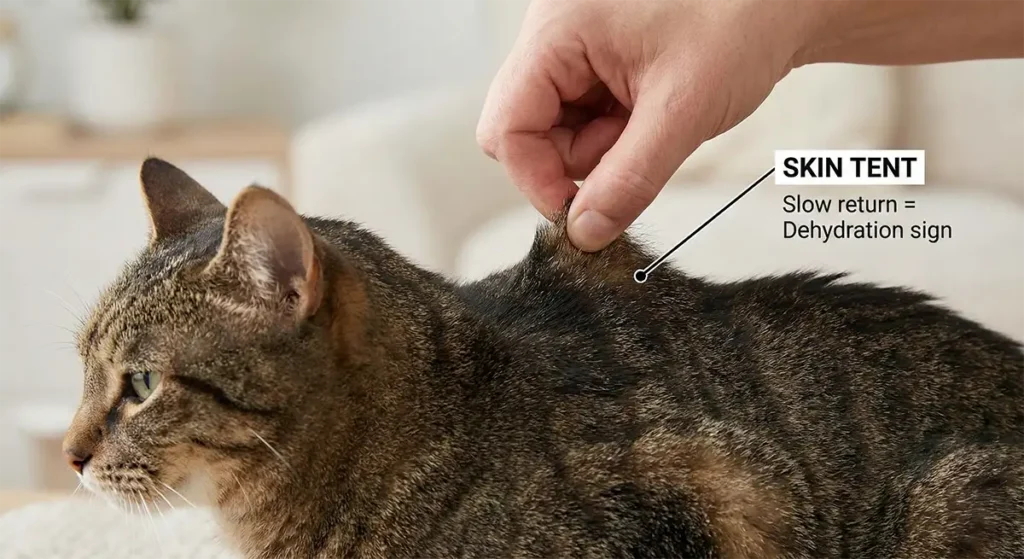
- Gently pinch a bit of loose skin between your cat’s shoulder blades.
- Lift it up slightly (like a tent) and let go.
- Hydrated: The skin snaps back into place instantly.
- Dehydrated: The skin moves back slowly or stays “tented” for a second.
The Gum Check
Lift your cat’s lip and touch their gums with your finger.
- Healthy: Gums feel wet and slippery.
- Dehydrated: Gums feel sticky, tacky, or dry.
5. 5 Simple Ways to Rehydrate Your Cat
You can’t force a cat to drink, but you can trick them into it. Here are some eco-friendly and effective methods:
- Switch to Wet Food: Even replacing one meal a day with canned food (or adding a topper) dramatically increases water intake.
- Add Water to Kibble: Add a tablespoon of warm water to their dry food. It creates a “gravy” that many cats enjoy.
- Get a Water Fountain: Still water in a bowl looks “stagnant” to a cat. Moving water signals freshness. A ceramic or metal fountain can encourage them to drink more often.
- Bone Broth: You can make a DIY unsalted bone broth (chicken or beef) and freeze it into cubes. It’s a tasty, hydrating treat.
- Use Ice Cubes: Some cats love batting around an ice cube in a wide bowl. It engages their hunting instinct and hydrates them as they lick the melting ice.
Final Thought
Dehydration in cats is often a silent issue that goes unnoticed until it becomes a medical problem. By understanding your cat’s desert ancestry and making small changes—like moving the water bowl or switching to wet food—you can protect their kidneys and improve their overall health.
Remember, a hydrated cat is a happy cat. Keep an eye on that water bowl; it’s one of the best indicators of your pet’s well-being.