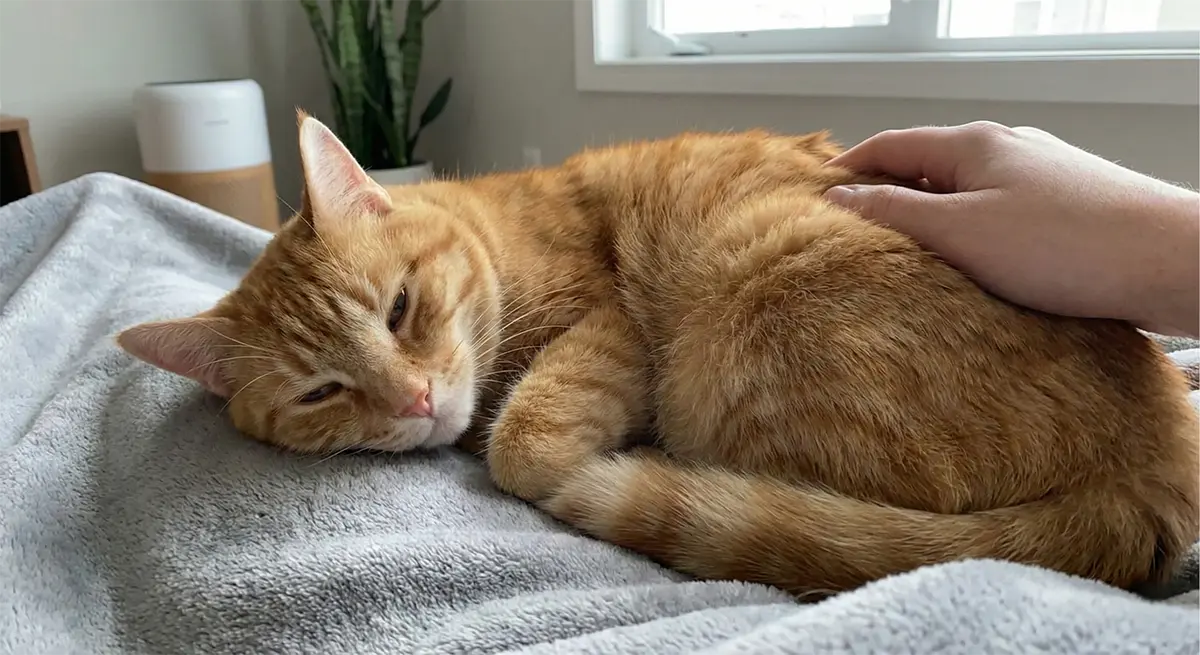
It’s one of the best feelings in the world: you’re on the couch, your cat is curled up on your chest, and they are purring like a diesel engine. It’s pure love.
But then, you feel it.
Underneath that rumble, their little chest is moving fast. Really fast. It almost feels like they are vibrating or hyperventilating. Suddenly, your relaxing snuggle session turns into panic mode. Is she having a heart attack? Is she suffocating? Or is she just really, really happy?
First, take a deep breath yourself. As cat owners, we tend to worry (it’s part of the job description), but fast breathing isn’t always a disaster. However, because cats are masters at hiding pain, you do need to know the difference between a “happy pant” and a medical red flag.
Here is how to tell if your cat is just excited or if it’s time to grab the carrier.
1. The “Happy” Causes: When It’s Totally Normal
Before you rush to the emergency vet, let’s look at the good news. Purring is actually physical work! It involves rapid muscle movement in the larynx (voice box) and diaphragm.
- The “Ecstatic” Purr: Have you ever seen your cat making biscuits (kneading) on a soft blanket with a glazed-over look in their eyes? When cats are in this state of pure bliss, their adrenaline spikes slightly. This excitement can temporarily speed up their heart rate and breathing. If the fast breathing stops as soon as they settle down, it was likely just joy.
- Kitten Energy: If you have a kitten, the rules are different. Kittens have a naturally faster metabolism and heart rate than adult cats. When they purr, their tiny bodies work hard, and it often looks like they are breathing a mile a minute.
- The REM Sleep Twitch: Is your cat asleep, purring softly, and breathing fast while their paws twitch? They are dreaming! Just like us, cats enter REM sleep where brain activity is high. This is perfectly normal.
2. The “Science” Check: How to Count Your Cat’s Breathing Rate
Okay, let’s get technical for a second. The only way to know if you should be worried is to check their Resting Respiratory Rate (RRR).
Here is the rule: A healthy adult cat should take between 20 and 30 breaths per minute when they are calm and resting.
How to calculate it at home:
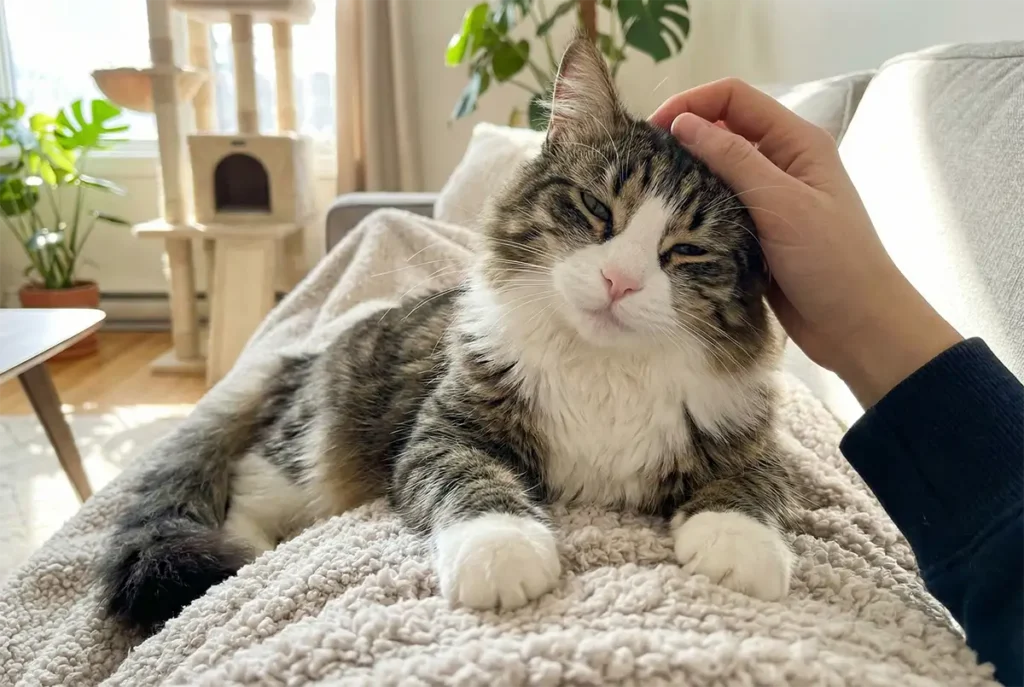
- Wait until your cat is sleeping or relaxing quietly (not playing or looking out the window).
- Watch their chest rise and fall. One rise + one fall = 1 breath.
- Set a timer on your phone for 15 seconds.
- Count the breaths during that time.
- Multiply that number by 4.
- Example: If you count 7 breaths in 15 seconds: 7 x 4 = 28 breaths per minute. (This is perfect!)
- The Warning Zone: If the number is consistently over 40 breaths per minute while they are sleeping, that is a red flag.
3. The Red Flags: When Purring Masks a Problem
Here is the tricky part about cats: They don’t just purr when they are happy. They also purr to soothe themselves when they are scared, injured, or sick. It’s a self-healing mechanism.
If your cat is breathing fast while purring, look for these other warning signs:
- Abdominal Effort: Is their stomach heaving in and out with force? Breathing should be smooth and barely noticeable. If their belly looks like a bellows, they are struggling for air.
- Open-Mouth Breathing: Unless they just chased a laser pointer for 10 minutes, a cat panting with their mouth open is usually a medical emergency.
- Hiding: If your cat is hiding in a closet or under the bed, purring loudly, and breathing fast, they are likely in pain.
- Pale or Blue Gums: Lift their lip gently. Their gums should be bubblegum pink. If they are pale, gray, or blueish, they aren’t getting enough oxygen.
4. Potential Medical Causes (Simplified)
If you’ve ruled out happiness and the breathing rate is consistently high, here are a few common culprits:
- Feline Asthma: Just like humans, cats can have allergic reactions that constrict their airways.
- Heart Issues (HCM): Hypertrophic Cardiomyopathy is a common heart condition in cats where the heart muscle thickens. This can cause fluid to build up around the lungs, making it hard to take deep breaths.
Respiratory Infections: Think of it like a “cat flu.” If they are sneezing or have runny eyes along with fast breathing, it might be an infection.
5. Eco-Tips: Improving Air Quality for Your Cat
At EcoPawsible, we believe prevention is the best medicine. Many respiratory issues in indoor cats are actually triggered by things we bring into our homes. Their lungs are tiny, so what smells “fresh” to us can be toxic to them.
Here are two quick changes you can make to help your cat breathe easier:
Ditch the Dusty Litter
Standard clay litter creates a cloud of silica dust every time your cat scratches. If your cat has asthma or sensitive lungs, inhaling this dust daily is a major trigger.
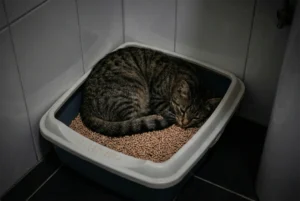
- The Fix: Consider switching to a natural option. Pine pellets, for example, are virtually dust-free and much safer for respiratory health. (Read more in our guide on Wood Pellet Cat Litter Pros and Cons).
Stop Using Chemical Scents
Plug-in air fresheners, scented candles, and essential oil diffusers often contain Volatile Organic Compounds (VOCs) that irritate feline lungs.
- The Fix: If you want your home to smell good without hurting your cat, opt for natural absorbers like charcoal bags or simmer pots. (Check out our list of Pet-Safe Air Fresheners for non-toxic alternatives).
Final thoughts: When to Call the Vet
So, is your cat okay?
If the fast breathing only happens when they are kneading your lap and stops when they fall asleep, enjoy the love—your kitty is just happy!
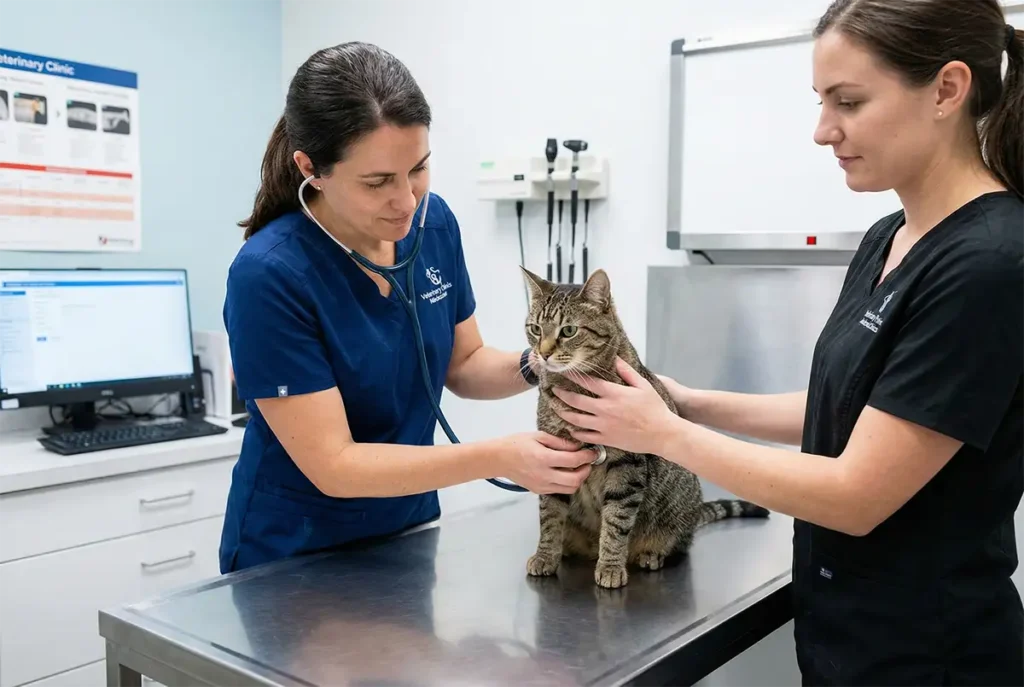
But if you notice their sleeping breath rate is consistently over 40, or if you see them struggling for air with their mouth open, please do not wait.
Important Note: We are passionate researchers and cat lovers, but we are not veterinarians. This article is for informational purposes only. If you suspect your cat is sick, struggling to breathe, or acting out of character, please stop reading and contact your veterinarian immediately for professional advice and treatment. Better safe than sorry!