If you are an eco-conscious cat owner, you probably stare at that plastic bag of used litter every week and feel a pang of guilt. We try to recycle our cans, compost our kitchen scraps, and reduce our plastic use. So, it brings up a logical question: “Can cat poop be composted too?”
After all, cow manure and chicken manure are gardening gold. Why not cat manure?
The short answer is yes, you can compost cat poop, but NOT in the way you might think.
You cannot simply toss it into your regular backyard compost bin with your banana peels and coffee grounds. Doing so could pose serious health risks to you and your family. However, with the right method, specific tools, and a strict set of rules, you can turn your feline’s waste into a nutrient-rich additive for your flower garden.
In this guide, we will break down the risks, the necessary precautions, and the three safest methods to compost cat litter properly.
The Big Risk: Why You Can’t Just Toss It in the Pile
Before we get to the “how-to,” we need to address the elephant in the room—or rather, the parasite in the poop.
The primary reason experts warn against composting cat waste is Toxoplasma gondii. This is a hardy parasite found in cat feces that causes Toxoplasmosis. While it usually causes mild flu-like symptoms in healthy adults, it can be hazardous for pregnant women and those with compromised immune systems.
Here is the catch: Standard backyard compost piles rarely get hot enough to kill this parasite.
To destroy Toxoplasma gondii, a compost pile must reach and maintain a sustained temperature of 145°F (62°C) for several days. Most casual compost bins only reach about 100°F–120°F. If you use “cool” compost on your vegetable garden, the parasites can contaminate your carrots and lettuce, ending up on your dinner plate.
The Golden Rule: Never, ever use cat waste compost on edible crops (vegetables, fruits, herbs). Use it ONLY for ornamental plants, flowers, trees, and shrubs.
The Prerequisite: You Must Use the Right Litter
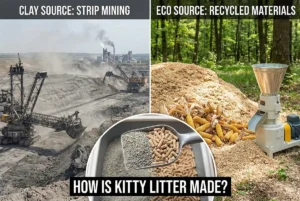
You cannot compost just any litter. Clay (bentonite) and silica gel litters are minerals; they do not break down into soil. They will simply turn your compost pile into a sticky, gray sludge.
To compost successfully, you must switch to a 100% biodegradable natural litter. The best options include:
- Pine or Wood Pellets
- Corn or Wheat
- Recycled Paper
- Grass Seed
(Curious about which natural litter is best? Read our deep dive on [What is Biodegradable Cat Litter Made Of?])
Once you have the right litter, choose one of the three methods below.
Method 1: Hot Composting (The Traditional Way)
This method requires effort and monitoring, but is great if you want usable soil for your flower beds.
What You Need:
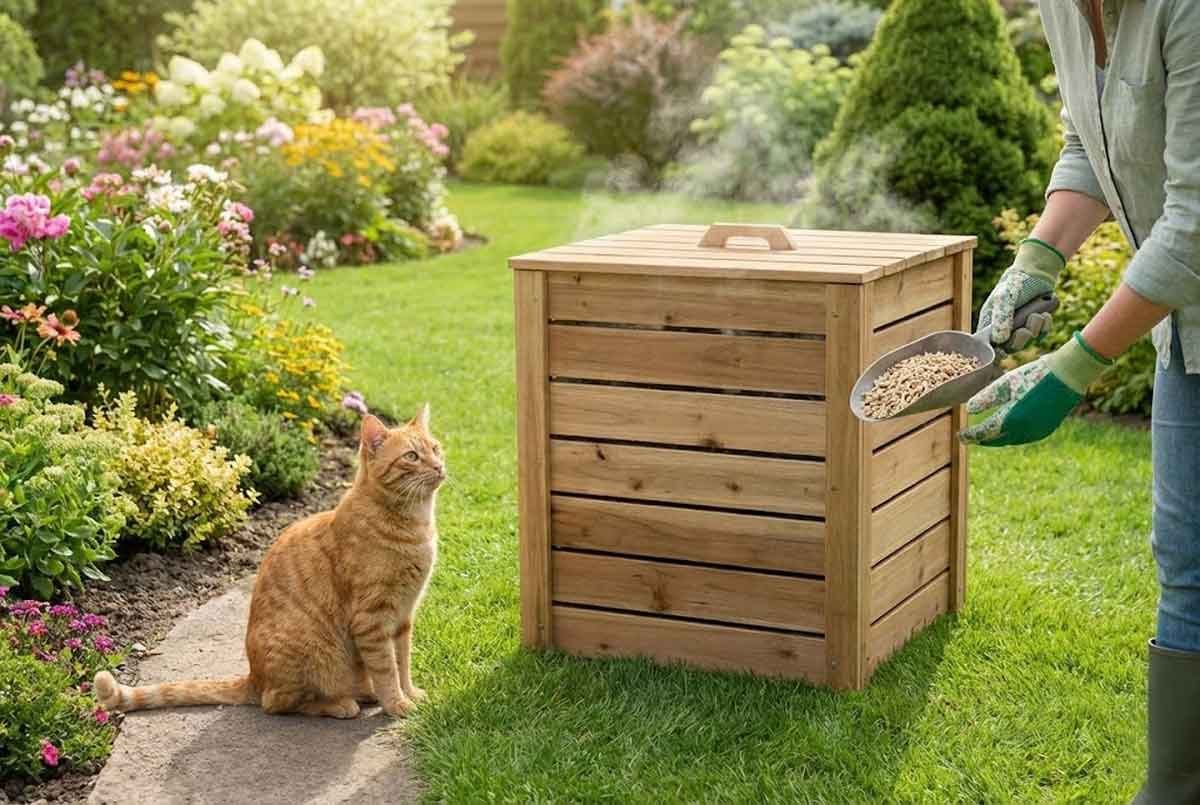
- A dedicated compost bin (separate from your kitchen waste bin).
- A compost thermometer.
- “Brown” materials (sawdust, straw, or dry leaves).
- High-nitrogen “Green” materials (the used cat litter).
The Process:
- Layer It: Alternate layers of used litter (Green) with layers of straw or sawdust (Brown).
- Moisture: Keep the pile damp, like a wrung-out sponge.
- Turn It: Aerate the pile regularly to feed oxygen to the microbes. This generates heat.
- Monitor Heat: Use your thermometer to ensure the center of the pile reaches at least 145°F (62°C).
- Cure: Let the compost “cure” or sit for at least 6 to 12 months before using it. This long wait time ensures pathogens die off naturally.
Method 2: The Bokashi Method (Easier & Odor-Free)
Bokashi is a Japanese method that uses fermentation instead of decomposition. It is an anaerobic process (meaning no air needed), which handles pathogens well and eliminates bad smells.
What You Need:
- A Bokashi bucket (airtight).
- Bokashi bran (inoculated with beneficial microbes).
The Process:
- Scoop the poop and clumped litter into the bucket.
- Sprinkle a layer of Bokashi bran over it and press it down firmly to remove air pockets.
- Seal the lid tightly.
- Once the bucket is full, let it sit sealed for two weeks to ferment.
- Final Step: You still need to bury the fermented waste in a trench in your ornamental garden (away from veggie patches). It will break down into the soil within 4-6 weeks.
Method 3: The “Green Cone” or Solar Digester (The Hands-Off Approach)
If you don’t care about harvesting the soil and just want a safe way to dispose of the waste without using plastic bags, a solar digester like the Green Cone is your best bet.
How It Works: The unit is partially buried in your garden. The top part consists of a double-walled solar cone that traps heat from the sun. Inside, heat and bacteria break down the waste rapidly, and the nutrients drain directly into the surrounding soil.
- Pros: Very low maintenance. You just drop the waste in; the sun does the rest.
- Cons: You don’t get “compost” to spread elsewhere; it stays where the cone is buried.
Where Can You Safely Use Cat Compost?
Even after hot composting or Bokashi fermentation, safety should be your priority.
✅ YES, Use It Here:
- Flower beds (Roses love it!)
- Ornamental shrubs and bushes.
- Lawn grass.
- Non-fruit-bearing trees.
❌ NO, Do Not Use Here:
- Vegetable patches (Tomatoes, lettuce, carrots, etc.).
- Berry bushes (Strawberries, raspberries).
- Herb gardens.
- Near children’s play areas (sandboxes).
Alternatives: What If Composting Isn’t For You?
Let’s be honest—hot composting takes work. If you live in an apartment or don’t have the time to monitor temperatures, that is okay! You can still be eco-friendly without a compost pile.
Consider using certified biodegradable poop bags. While they will still end up in a landfill, they break down faster than traditional plastic bags. Or, check if your city offers specific green-bin programs that accept pet waste (though this is rare).
(For more disposal tips, check out our guide on [How to Properly Dispose of Eco-friendly Cat Waste]).
Conclusion
Can cat poop be composted? Absolutely. It is the ultimate zero-waste move for the dedicated pet parent. However, it is a process that demands respect for hygiene and safety rules.
If you have the space and the patience, a “Green Cone” or a dedicated hot compost bin can transform your cat’s waste into food for your flowers. But if you are ever in doubt about the temperature or safety, stick to biodegradable bags. Keeping your family healthy is always the most “EcoPawsible” choice.