Pregnancy is a time of joy, planning, and, unfortunately, a long list of “Do’s and Don’ts.” No sushi, no soft cheese, limit caffeine… but what about the cat?
If you are a cat owner expecting a baby, you have likely heard the warning: “Stay away from the litter box!”
Is this an old wives’ tale, or is it a serious medical fact?
The short answer is: Ideally, pregnant women should avoid cleaning the litter box. However, if you live alone or have no one else to do it, you can do it safely by following strict protocols.
In this guide, we will explain the medical reasoning behind this warning (it’s not just about the smell!) and provide a safety checklist approved by health experts to protect you and your baby.
The Hidden Danger: What is Toxoplasmosis?
The main reason doctors advise pregnant women to avoid cat litter is a parasite called Toxoplasma gondii. This parasite causes an infection known as Toxoplasmosis.
For most healthy adults, this infection feels like a mild flu or has no symptoms at all. However, for a developing fetus, the consequences can be severe.
According to the Centers for Disease Control and Prevention (CDC), if a woman gets infected with Toxoplasmosis during pregnancy (or just before), she can pass the infection to her unborn child. This can lead to:
- Miscarriage or stillbirth.
- Birth defects (such as blindness or brain damage).
- Developmental delays later in the child’s life.
Note: If you have owned cats for years, you might already be immune to Toxoplasmosis. You can ask your doctor for a simple blood test to check your immunity.
The “Ideally No” Rule
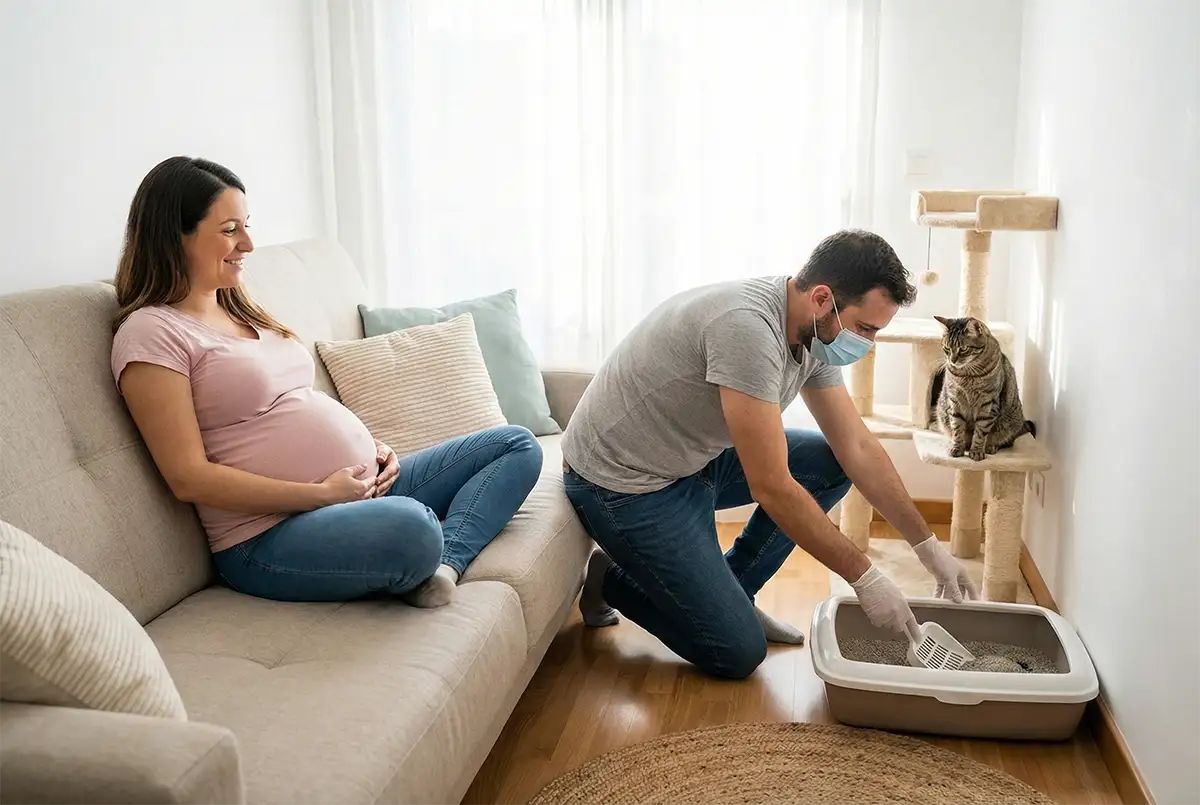
If you have a partner, roommate, or family member living with you, the safest solution is simple: Hand over the scoop.
Make it their responsibility for the next 9 months. It is not about being lazy; it is about eliminating a preventable risk.
If You MUST Clean It: The Safety Protocol
We understand that not everyone has help. If you live alone or your partner is away, you might have to clean the box yourself.
Do not panic. You can do this safely if you follow these strict steps recommended by veterinary and health professionals:
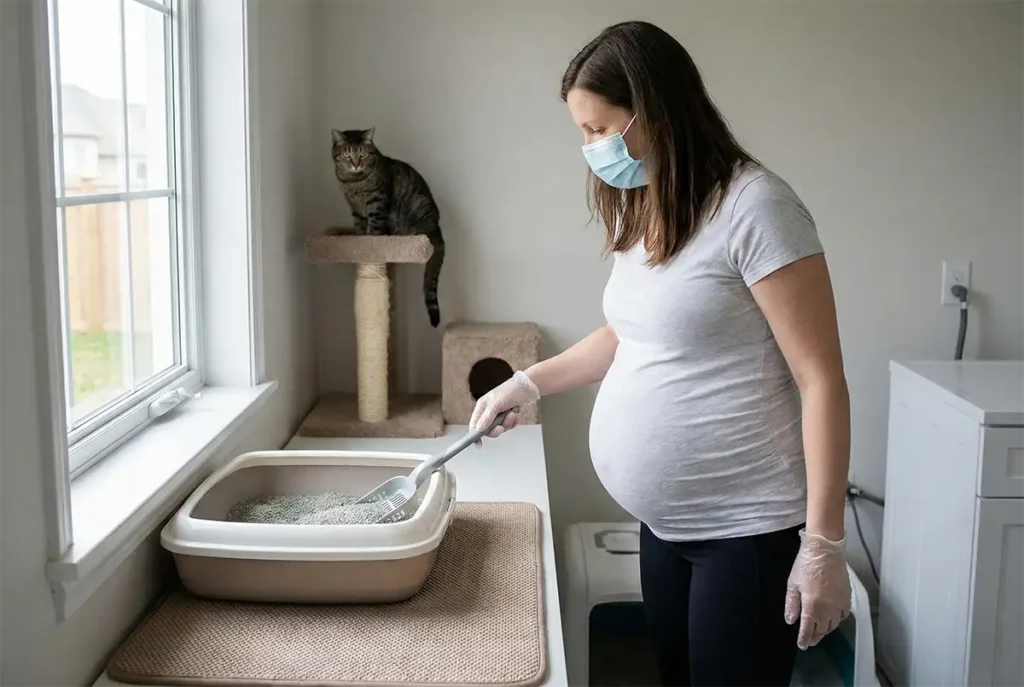
1. Wear Protective Gear
Never touch the litter or the box with your bare hands. Always wear disposable gloves. For extra precaution, you can also wear a face mask to avoid inhaling any dust that might carry bacteria.
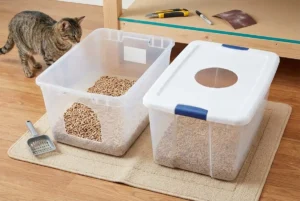
Tip: Consider using a high-sided DIY litter box to keep the mess contained. This prevents infected litter from scattering on the floor, reducing your risk of exposure while cleaning.
2. Scoop Daily (The 24-Hour Rule)
This is the most critical scientific fact to remember: The Toxoplasma parasite in cat feces does not become infectious immediately. It takes 1 to 5 days after the cat poops for the spores to become dangerous.
- Action: Scoop the box every single day. If you remove the waste within 24 hours, the parasite has no time to become infectious.
3. Wash Hands Thoroughly
After you remove your gloves, wash your hands immediately with soap and warm water for at least 20 seconds. Do not touch your face or mouth before washing.
4. Keep Your Cat Indoors
Cats get Toxoplasma by eating infected rodents, birds, or raw meat.
- Keep your cat strictly indoors to prevent them from hunting.
- Feed them high-quality commercial cat food (canned or dry) instead of raw meat.
Should I Rehome My Cat?
Absolutely not.
There is a common myth that pregnant women need to give up their cats. This is heartbreaking and unnecessary. You are not likely to get Toxoplasmosis from petting your cat or having them sit on your lap. The parasite is only shed in their feces.
As long as you avoid direct contact with the litter box (or clean it with the precautions above), your furry friend can stay right by your side throughout your pregnancy.
Summary Checklist for Moms-to-Be
- Best Scenario: Ask someone else to clean the litter box.
- If You Must Clean: Wear gloves and scoop daily (every 24 hours).
- Hygiene: Wash hands thoroughly after any contact with cat items.
- Prevention: Keep cats indoors and avoid feeding raw meat.
Disclaimer: This article is for informational purposes only and does not constitute medical advice. Always consult your obstetrician or healthcare provider regarding specific risks during your pregnancy.