Let’s be honest: cleaning the litter box is the least glamorous part of being a cat parent. However, it is arguably the most important one for your cat’s health.
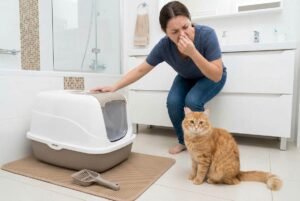
A dirty box isn’t just smelly for you; it is stressful for your cat. In fact, a dirty litter box is the number one reason cats start doing their business on your carpet instead of their designated spot.
If you walk down the cleaning aisle at the supermarket, you will see dozens of harsh chemical sprays promising a “fresh scent.” But are those chemicals safe for your pet?
If you are wondering how do you clean a cat litter box without exposing your furry friend to toxic fumes, you are in the right place.
Here is the best way to clean a cat litter box—naturally, safely, and effectively.
Why You Should Ditch the Bleach (Safety First)
Many cat owners instinctively reach for bleach or ammonia-based cleaners to kill germs. Please, stop.
Cat urine contains ammonia. If you clean the box with an ammonia-based cleaner, your cat might smell it and think, “Hey, this smells like a bathroom already!” It can actually encourage them to pee elsewhere.
More importantly, mixing bleach with cat urine (ammonia) can create toxic chloramine gas, which is dangerous for both you and your cat.
The Solution: The best way to clean a cat litter box is using simple, non-toxic ingredients you likely already have in your kitchen: Vinegar and Baking Soda.
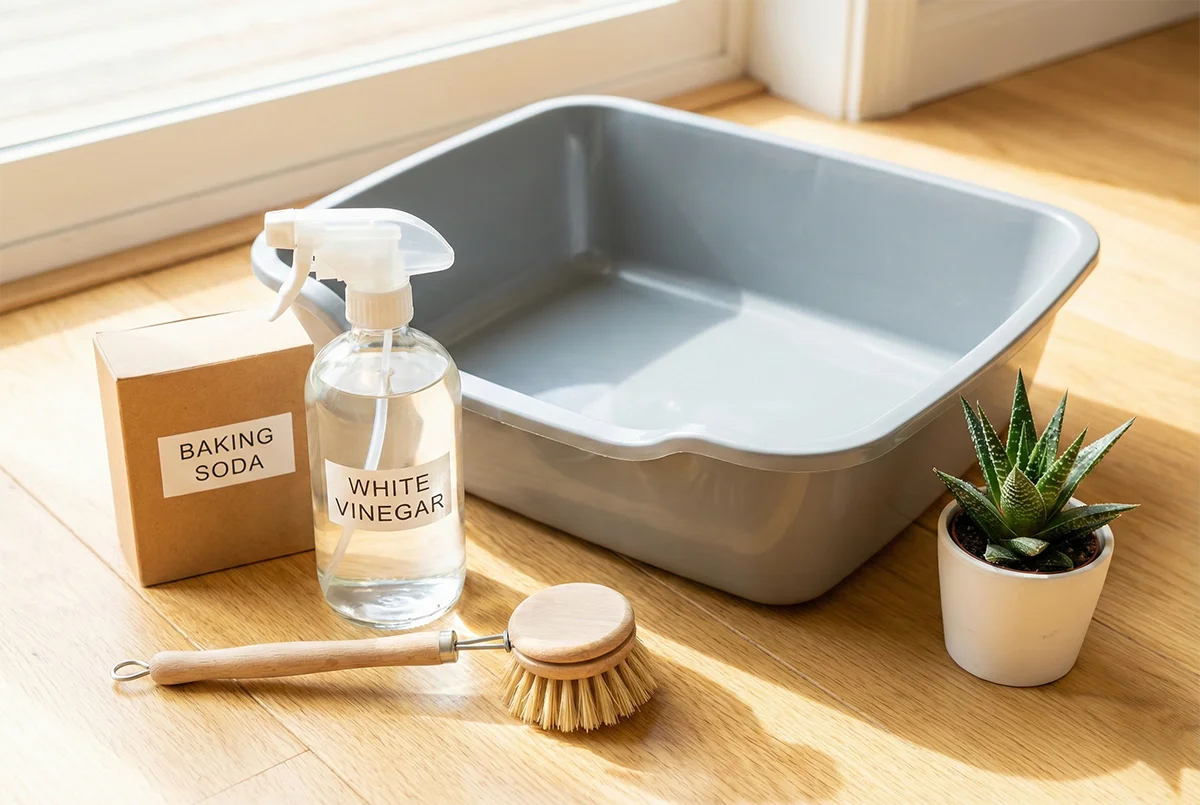
The “Eco-Clean” Toolkit: What You Need
Before you start, gather your supplies. You don’t need expensive enzymatic cleaners for a routine wash.
- Mild Dish Soap: Unscented is best (cats have sensitive noses).
- White Vinegar: A natural disinfectant that breaks down mineral deposits.
- Baking Soda: The ultimate odor absorber.
- Hot Water: To loosen stuck-on mess.
- A Dedicated Scrub Brush: Keep this separate from your household cleaning tools!
- Paper Towels: For drying.
The Routine: How Often Should You Clean?
A clean box equals a happy cat. Here is a simple schedule to follow:
- Daily: Scoop out waste at least once a day. (Twice is better!).
- Weekly: If you use traditional Clay Litter, you need to empty and wash the box once a week. Clay holds onto bacteria and moisture.
- Monthly: If you use Wood Pellet Litter, a full wash is usually needed only once every 2-3 weeks, as pellets are naturally antimicrobial and don’t stick to the pan as much.
Read More: New to pellets? Check out our guide on Pros and Cons of Wood Pellet Litter.
Step-by-Step: The Best Way to Clean a Cat Litter Box
Ready to get scrubbing? Follow this 6-step process to banish odors without the chemical burn.
Step 1: Empty the Box
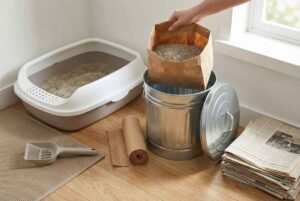
Dump the old litter into a biodegradable trash bag. Tip: Never flush clay litter down the toilet! It expands and will destroy your plumbing. (Some wood pellets are flushable, but check the packaging first).
Step 2: The Pre-Soak
If there is caked-on mess at the bottom, don’t scrub yet. Fill the box with hot water and a squirt of dish soap. Let it sit for 10-15 minutes. This softens the grime and makes your job effortless.
Step 3: The “Fizz” Scrub (Our Secret Sauce)
This is where the magic happens.
- Pour out the soapy water.
- Sprinkle a generous layer of Baking Soda over the wet bottom of the box.
- Spray or pour White Vinegar over the baking soda.
- Watch it fizz! This chemical reaction helps lift deep-set odors and stains from the plastic scratches.
- Use your scrub brush to scour the bottom and sides thoroughly.
Step 4: Rinse Thoroughly
Rinse the box with clean water. Make sure all traces of soap and vinegar are gone. Cats are very sensitive to leftover smells, and you want the box to smell neutral, not like a salad dressing.
Step 5: The “Sun-Bathe” (Optional but Recommended)
If it’s a sunny day, dry the box outside in direct sunlight for 30 minutes. UV rays are a powerful natural disinfectant that kills lingering bacteria and mold spores.
Step 6: Refill & Refresh
Once the box is completely dry, pour in fresh litter. Aim for 2-3 inches of depth.
- Too shallow? Your cat can’t bury their waste.
- Too deep? Litter will spill out when they dig.
Struggling with a mess? See our tips on 9 Genius Cat Litter Tracking Hacks to keep your floors clean.
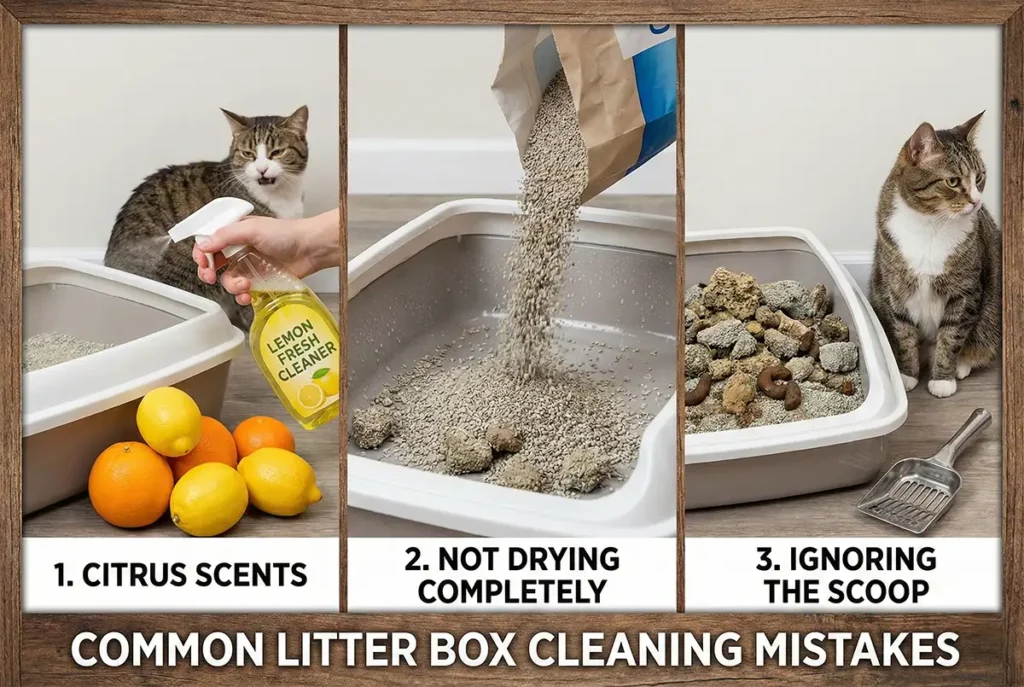
3 Common Mistakes to Avoid
- Using Citrus Scents: You might love the smell of lemons, but cats hate it. Using lemon or orange-scented cleaners can deter your cat from using the box entirely.
- Not Drying Completely: Never put fresh litter into a damp box. Moisture breeds bacteria and mold, especially with plant-based litters like corn or wheat.
- Ignoring the Scoop: No amount of washing fixes a box that isn’t scooped daily. Think of it like a toilet—you wouldn’t wait a week to flush it!
How to Stop Litter Box Smell Between Cleanings
Want to keep the box fresh for longer? Here is a pro tip: Before pouring in new litter, sprinkle a thin layer of Baking Soda directly onto the plastic bottom of the empty box. This acts as a hidden odor-eater that works 24/7.
Also, remember that plastic boxes are porous. Over time, scratches from your cat’s claws trap bacteria that no amount of scrubbing can remove. It is recommended to replace the litter box entirely once a year.
Final thoughts
Cleaning the litter box doesn’t have to be a toxic chemical war.
By using simple, earth-friendly ingredients like vinegar and baking soda, you can ensure your cat’s bathroom is sanitary and safe. It’s cheap, it’s effective, and it’s the best way to clean a cat litter box for the health of your pet and the planet.
Frequently Asked Questions (FAQ)
Can I use Clorox wipes on my cat’s litter box?
A: It is better to avoid them. Most disinfectant wipes contain harsh chemicals that can irritate a cat’s paws or lungs. If you must use them for a quick wipe, rinse the box with water afterward to remove the chemical residue.
How do you clean a cat litter box in an apartment?
A: If you don’t have a yard/hose, clean it in the bathtub. Crucial: Use a drain catcher to prevent litter granules from going down the drain, and disinfect your tub thoroughly afterward.
Is vinegar safe for cats?
A: Yes. While cats don’t love the smell of vinegar, it is non-toxic. Once it dries and the smell dissipates, it is completely safe.