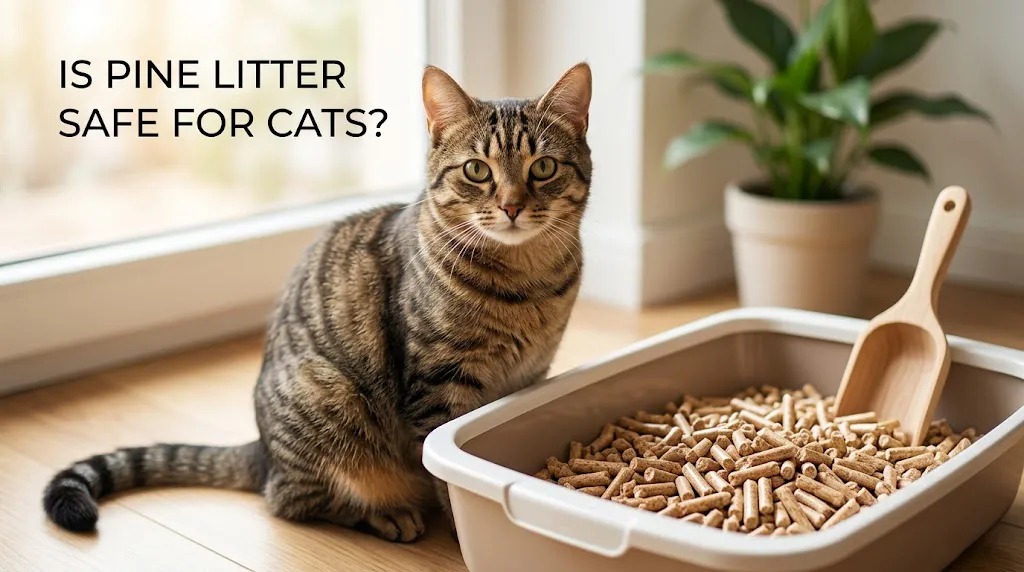
As an eco-conscious cat parent, you are likely looking for alternatives to dusty, environmentally damaging clay litters. Pine pellet litter frequently pops up as a top sustainable choice. But if you’ve done any research online, you might have stumbled across a terrifying claim: pine is toxic to cats.
So, is pine litter safe for cats? The short answer is yes—but only if it is properly processed.
In this guide, we will uncover the truth behind phenol toxicity, explain exactly what “kiln-dried” means, and help you decide if pine litter is the right eco-friendly switch for your feline friend.
The Danger Zone: Why Raw Pine is Toxic to Cats
The fear surrounding pine isn’t entirely a myth. Pine trees naturally produce resins and essential oils that give them their signature fresh, woody scent. These natural oils contain chemical compounds called phenols.
While humans and dogs can process phenols safely, cats cannot. Felines lack a specific liver enzyme called glucuronidase, which is necessary to break down and eliminate these toxins from their bodies. If a cat is exposed to raw pine wood, pine essential oils, or household cleaners containing pine, the phenols can rapidly build up in their system. This toxicity can lead to severe liver damage, respiratory distress, and neurological issues.
If you are looking for safe ways to clean around the litter box without using toxic pine chemicals, check out our guide on how to make a [natural floor cleaner safe for pets].
The Solution: What Does “Kiln-Dried” Mean?
If raw pine is toxic, how can commercial pine litter be safe? The secret lies in the manufacturing process.
Reputable cat litter companies do not simply chop up raw pine trees and put them in a bag. Instead, they use a crucial process called kiln-drying. During this process, the raw pine wood is baked at extremely high temperatures in a kiln. This intense, sustained heat completely evaporates the natural oils, resins, and toxic phenols out of the wood.
What is left behind is a 100% safe, chemical-free, and highly absorbent pine pellet that poses no threat to your cat’s liver or respiratory system.
The Golden Rule for Pet Parents: When shopping for pine litter, always check the packaging. It must explicitly state that the product is “Kiln-Dried,” “Heat-Treated,” or “100% natural pine with no additives.” Never use raw pine shavings meant for horse stalls, woodworking, or hardware projects in your cat’s litter box.
3 Reasons Eco-Conscious Pet Parents Love Pine Litter
Once you ensure the pine is properly kiln-dried, it becomes one of the best sustainable choices on the market. Here is why so many cat owners are making the switch:
1. Zero Clay Dust (Asthma Safe)
Traditional clumping clay litter contains silica dust, which can irritate your cat’s lungs and trigger asthma flare-ups. Kiln-dried pine pellets are virtually dust-free, providing a much safer breathing environment for both you and your pet.
2. Highly Sustainable & Biodegradable
Most pine litter is manufactured by upcycling leftover lumber scraps and sawdust that would otherwise end up in a landfill. Because it is a natural plant material, pine litter is fully biodegradable.
3. Natural Odor Control
You don’t need harsh chemical fragrances to keep your home smelling fresh. Pine wood naturally neutralizes the strong smell of ammonia found in cat urine, trapping the odor within the fibers of the wood.
The Downsides: Is Pine Litter Right for Every Cat?
While pine is safe and sustainable, it does require an adjustment period:
- Texture Rejection: Pine pellets are large and cylindrical, vastly different from the soft, sandy texture of clay. Some cats with sensitive paws refuse to step on them.
- Non-Clumping Nature: Unlike clay, pine pellets do not form hard, scoopable clumps when wet. Instead, when they absorb urine, the pellets dissolve into a fine sawdust. This requires a slightly different cleaning routine, ideally using a sifting litter box.
How to Safely Transition Your Cat to Pine Litter
Cats are creatures of habit and often despise sudden changes to their bathroom routine. To prevent your cat from boycotting the litter box, transition them slowly over two to three weeks:
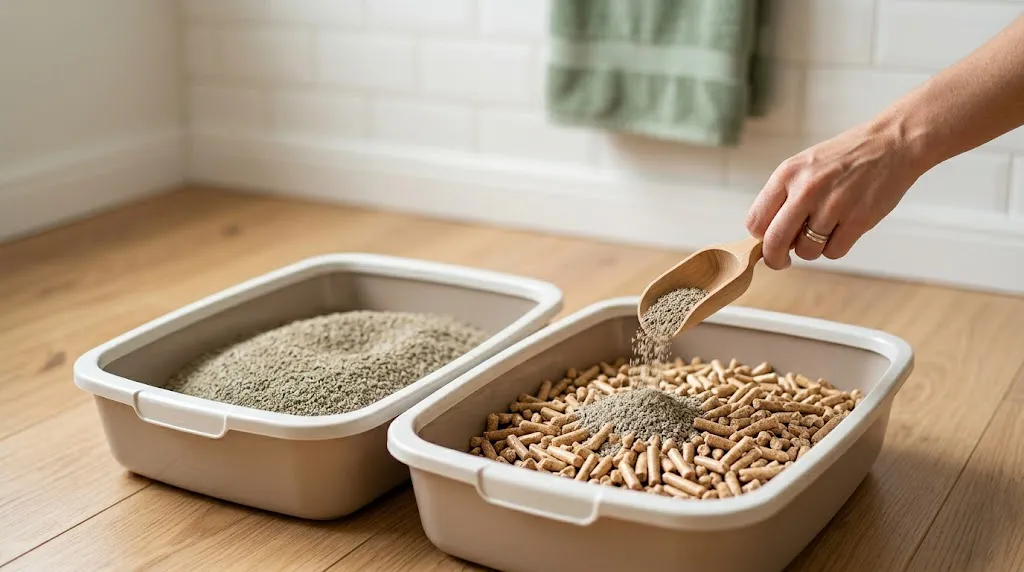
- Week 1: Keep the box filled mostly with their old litter, sprinkling just a handful (about 10%) of pine pellets on top to introduce the new scent and texture.
- Week 2: Mix the litters, using 75% old litter and 25% pine pellets.
- Week 3: Move to a 50/50 mix. If your cat continues to use the box without issue, gradually increase the pine ratio until the old litter is completely phased out.
The Bottom Line
Switching to a natural litter is a fantastic way to reduce your household’s carbon paw-print. As long as you diligently check the label to ensure the product is properly kiln-dried, pine litter is an incredibly safe, chemical-free, and effective choice for your cat.