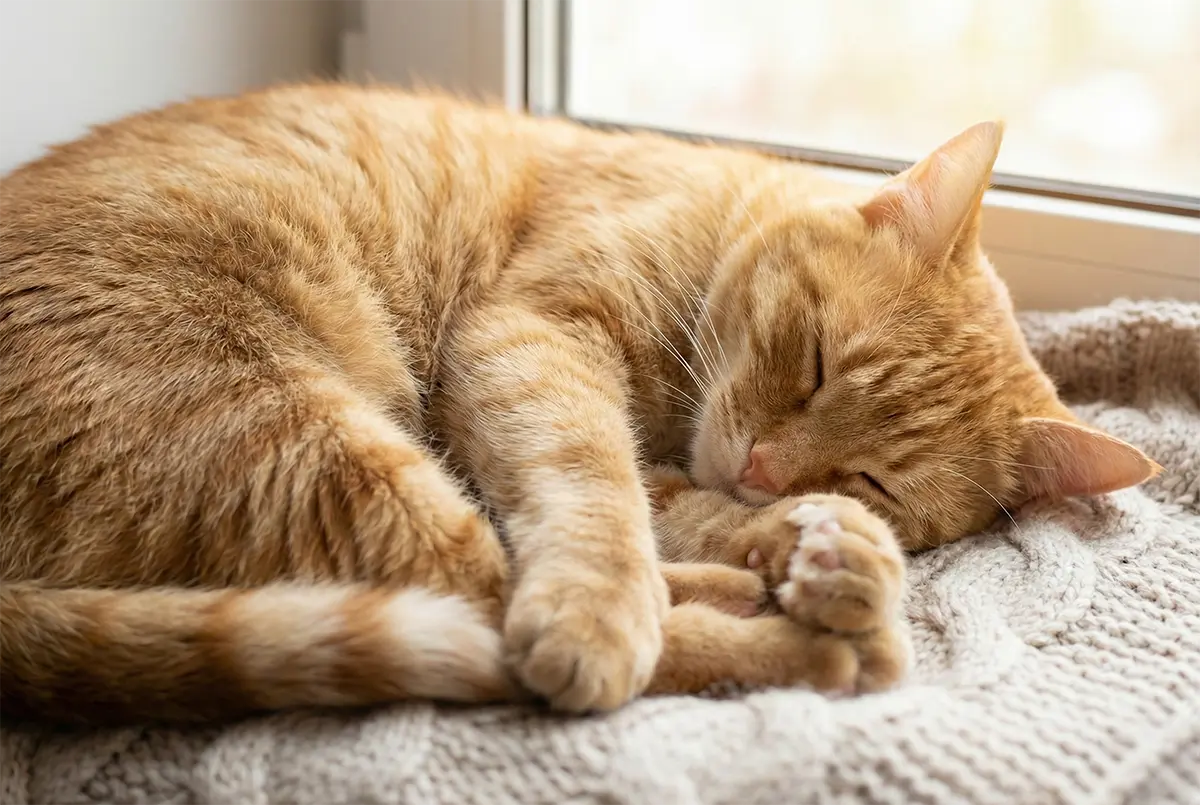
You are sitting on the couch, reading a book or scrolling through your phone, while your cat snoozes peacefully beside you. Suddenly, you feel a vibration.
You look over, and your kitty is twitching. Her paws are paddling as if she’s running a marathon, her ears are flickering, and her whole body seems to be trembling.
Your stomach drops. Is she okay? Is she having a seizure? Is she cold?
It is a terrifying moment for any pet parent. We often assume the worst, imagining neurological disorders or medical emergencies. But before you panic and rush to the emergency vet at midnight, take a deep breath.
The vast majority of the time, shaking while sleeping is completely normal. However, there is a fine line between a harmless dream and a medical tremor.
In this guide, we will help you decode your cat’s sleep movements, explain why they happen, and highlight the specific “Red Flags” (like household toxins) that require immediate attention.
The Most Common Cause: They Are Just Dreaming (REM Sleep)
If you see your cat twitching, paddling, or chattering while asleep, there is a 90% chance they are just chasing mice in Dreamland.
Just like humans, cats experience different stages of sleep. The most active stage is Rapid Eye Movement (REM) sleep. This is when the brain is highly active, processing the day’s events.
The Science of the “Twitch”
During REM sleep, nature has a clever safety mechanism called “muscle atonia.” Essentially, the brain sends a signal to paralyze the large muscles in the body so that your cat doesn’t actually get up and run around the house while dreaming.
However, this paralysis isn’t always perfect. Signals sometimes “leak” through to the smaller muscles. This results in:
- Whiskers twitching.
- Paws paddling or jerking.
- Tail flicking.
- Soft squeaks or chattering noises.
How to tell it’s a dream: If your cat’s body looks relaxed and “floppy” despite the twitching, and if their eyes are moving rapidly under their closed eyelids, they are deep in a dream cycle. This usually lasts for a few minutes and then stops.
They Might Be Cold (Hypothermia)
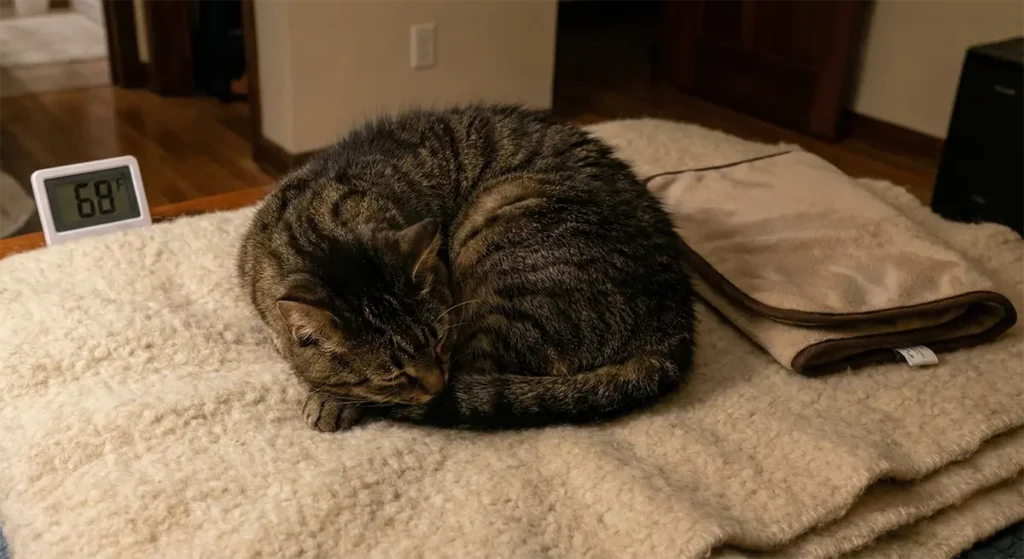
We often forget that our cats run hotter than we do. The normal body temperature for a cat is between 100.5°F and 102.5°F. A room temperature that feels comfortable to you (say, 68°F or 70°F) might feel chilly to a sleeping cat, especially if they have thin fur (like a Sphinx or Rex) or are elderly.
When a cat’s body temperature drops, their muscles shiver to generate heat—just like ours do.
The Signs
- The Posture: They are curled up in a tight “donut” ball to conserve heat.
- The Coat: Their fur might be puffed up (piloerection) to trap warm air.
- The Shake: It looks like a fine, constant vibration or shiver, rather than the jerky paddling of a dream.
The Eco-Friendly Fix: Instead of using electric heating pads (which can pose a fire risk or emit EMFs), opt for natural insulation. A simple wool blanket or a self-warming mat (which reflects their own body heat back to them) is the safest way to keep them cozy.
Fear and Stress (The “Nightmare” Effect)
Can a cat shake from anxiety even while they are resting? Absolutely.
Cats are masters of masking stress, but it has to come out somewhere. If your cat is in a new environment, if there are fireworks going off outside, or if you recently brought a new pet home, their cortisol levels (stress hormones) are high.
Even when they try to rest, their muscles may remain tense and tremble due to the adrenaline still coursing through their system. It’s the feline equivalent of sleeping with one eye open.
“Stress manifests in many ways, from digestive issues to behavioral changes. If your cat seems anxious, check out our guide on how stress affects their routine in Why Does My Cat’s Poop Smell So Bad? – gut health and anxiety are often linked.”
The Dangerous Shakes: Medical Causes to Watch For
While dreams and cold are harmless, some tremors signal that your cat’s body is in distress. This is where you need to be observant.
Hypoglycemia (Low Blood Sugar)
This is most common in kittens or diabetic cats. If a cat hasn’t eaten in a long time, their blood sugar can drop dangerously low, causing weakness and severe shaking. If you have a diabetic cat on insulin and they start shaking, this is an emergency.
Pain or Injury
Cats are stoic; they rarely whine when they hurt. Instead, they curl up and tremble. If your cat is shivering but it’s not cold, and they growl or hiss when you touch a specific spot, they might be dealing with an injury or a fever.
Toxicity (The Silent Killer)
This is a critical section for eco-conscious owners. Sometimes, the shaking is a reaction to a toxin in your home.
- Permethrin Poisoning: This is the #1 cause of violent tremors in cats. Permethrin is found in many dog flea treatments. If you accidentally put dog medicine on your cat, or if your cat cuddles with a dog who was just treated, they can suffer severe tremors and seizures. This requires immediate vet care.
- Essential Oils: We love natural scents, but some oils like Tea Tree (Melaleuca) and Peppermint are toxic to felines. Diffusing these in a closed room can cause neurological issues, leading to twitching and unsteadiness.
“Ensure your home is safe by avoiding toxic diffusers. Read our full list of safe alternatives in Pet-Safe Air Fresheners: 5 Natural Ways to Deodorize Your Home.”
Is It a Seizure? (How to Tell the Difference)
This is the question that keeps owners up at night. How do you tell the difference between a vivid dream and a seizure?
Here is the “Wake Up” Test: If your cat is twitching and you gently call their name or lightly touch them, a dreaming cat will wake up (maybe a bit groggy, but they will wake up). The shaking will stop immediately.
A cat having a seizure CANNOT be woken up.
Signs of a Seizure:
- Rigid Body: Instead of being floppy, their limbs are stiff and locked.
- Violent Convulsions: The shaking is violent and jerky, not just a paddle.
- Facial Signs: Foaming at the mouth, drooling, or champing the jaws.
- Loss of Control: They may urinate or defecate during the episode.
- The Eyes: Their eyes may be wide open with a blank, glassy stare.
(If you suspect a seizure, do not try to hold them down. Keep your hands away from their mouth to avoid bites, and get them to a vet immediately after it stops.)
What Should You Do? (Step-by-Step)
If you notice your cat shaking and you aren’t sure why, follow this checklist:
- Do NOT Panic: Your cat can sense your fear, which will only stress them out more.
- Observe the Environment: Is the room cold? Is there a loud noise outside?
- The Gentle Check: Softly call their name or gently place a hand on their back.
- If they wake up and look at you: It was just a dream. Go back to sleep!
- If they don’t respond and continue shaking: It might be medical.
- Record a Video: If the shaking continues, grab your phone. A 30-second video is incredibly valuable for your vet to determine if it’s a tremor or a seizure.
- Warm Them Up: If they seem conscious but shivering, offer a warm blanket.
FAQ: Cat Sleep Behaviors
Q: Why do kittens twitch more than adult cats?
A: Kittens spend a huge amount of time in REM sleep because their brains and nervous systems are developing rapidly. Those twitches are actually their nervous system building connections!
Q: Should I wake my cat up if they are having a nightmare?
A: It is best not to. Startling a cat out of a nightmare can result in an accidental scratch or bite because they might think they are still fighting that “dream monster.” It’s safer to let them sleep it out.
Q: Do cats shiver when they have a fever?
A: Yes. Just like humans have “chills” when running a fever, cats can shiver when their temperature spikes.
Final thoughts
Seeing your cat shake while sleeping can be startling, but 90% of the time, it is simply a sign of a happy, deep sleep. It means they feel safe enough in your home to drift into a deep REM cycle.
However, knowing the difference between a “dream twitch” and a “medical tremor” is part of being a responsible pet parent. Keep an eye on the red flags—like rigidity or unresponsiveness—and ensure your home is free of hidden toxins like essential oils or dog flea meds.
When in doubt, trust your gut. But most likely? Your kitty is just dreaming about catching that laser pointer.
⚠️ Medical Disclaimer
Please Note: We are passionate researchers and devoted cat lovers at EcoPawsible, but we are not veterinarians. The information in this article is for educational purposes only and should not replace professional medical advice. If your cat is shaking violently, cannot be woken up, or is displaying signs of toxicity, please contact your veterinarian or an emergency animal hospital immediately.