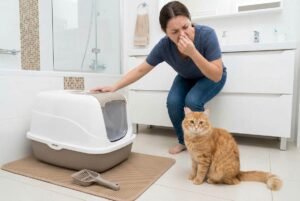
Living in an apartment with a cat is a joy—until it comes to the “scoop and toss” routine.
If you lived in a house with a backyard, this would be easy. You could just walk out to your outdoor trash can or bury the biodegradable waste in a dedicated compost spot. But in an apartment? You are dealing with limited space, shared hallways, elevators, and—worst of all—no obvious place to store smelly waste until trash day.
Every apartment-dwelling cat owner has faced the same awkward questions: Do I really have to walk to the dumpster every single day? Can I just flush it? Will my neighbors hate me if I use the trash chute?
Don’t worry. Managing litter in a small space doesn’t have to be a smelly nightmare. Here is a complete guide on how to dispose of cat litter in an apartment without annoying your neighbors or ruining your plumbing.
1. The “Bag and Bin” Method (Done Right)
This is the classic method, but most people do it wrong. They toss the scoop into a flimsy grocery bag, tie a loose knot, and throw it in the kitchen trash. The result? Within two hours, your entire apartment smells like a litter box.
Here is the pro way to handle the “Bag and Bin” system in a small space:
- Ditch the Grocery Bags: Those free plastic bags often have tiny micro-holes. Instead, invest in biodegradable waste bags (like Earth Rated). They are thicker, trap odors better, and are kinder to the planet.
- The “Double-Bag” Rule: If your building has a trash chute, always double-bag the heavy clumps. The last thing you want is a bag bursting open on its way down from the 10th floor.
- Use a Dedicated “Poop Pail”: Never mix cat waste with your regular kitchen trash. Buy a small, dedicated metal bin with a tight-fitting lid (a step-on pedal bin works best). Keep this bin in the bathroom or on the balcony if you have one.
- The Baking Soda Hack: Sprinkle a layer of baking soda at the bottom of this dedicated bin. It acts as a neutralizer, absorbing any odors that might leak out of the bags.
2. Use a Litter Disposal System (The “Litter Genie” Concept)
If you are tired of walking to the building’s dumpster every day, a specialized disposal system is a game-changer for apartment life.
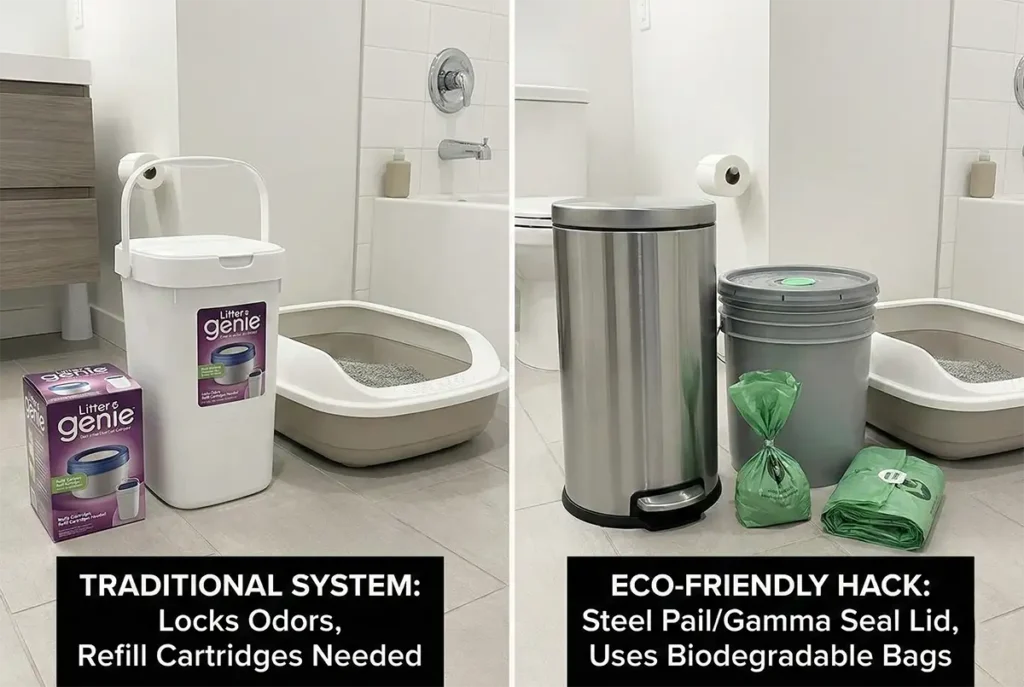
These systems (like the popular Litter Genie) work like a diaper pail. You scoop the waste, drop it in, and pull a handle. The waste is sealed away into an airtight compartment at the bottom.
- The Pros: It locks in odors completely. You can store up to two weeks’ worth of waste in the unit before you need to empty it.
- The Cons: You have to buy specific refill cartridges, which creates extra plastic waste.
- The Eco-Friendly Hack: You can achieve a similar result using a standard stainless steel diaper pail or a heavy-duty bucket with a gamma seal lid (screw-top). These allow you to use regular biodegradable bags instead of expensive plastic cartridges.
3. Can You Flush Cat Litter in an Apartment? (The Big Warning)
This is the most tempting option for apartment dwellers. Why carry bags downstairs when you have a toilet right there?
The short answer: generally, NO.
Unless you want to risk a $500 visit from a plumber and an angry call from your landlord, think twice before flushing.
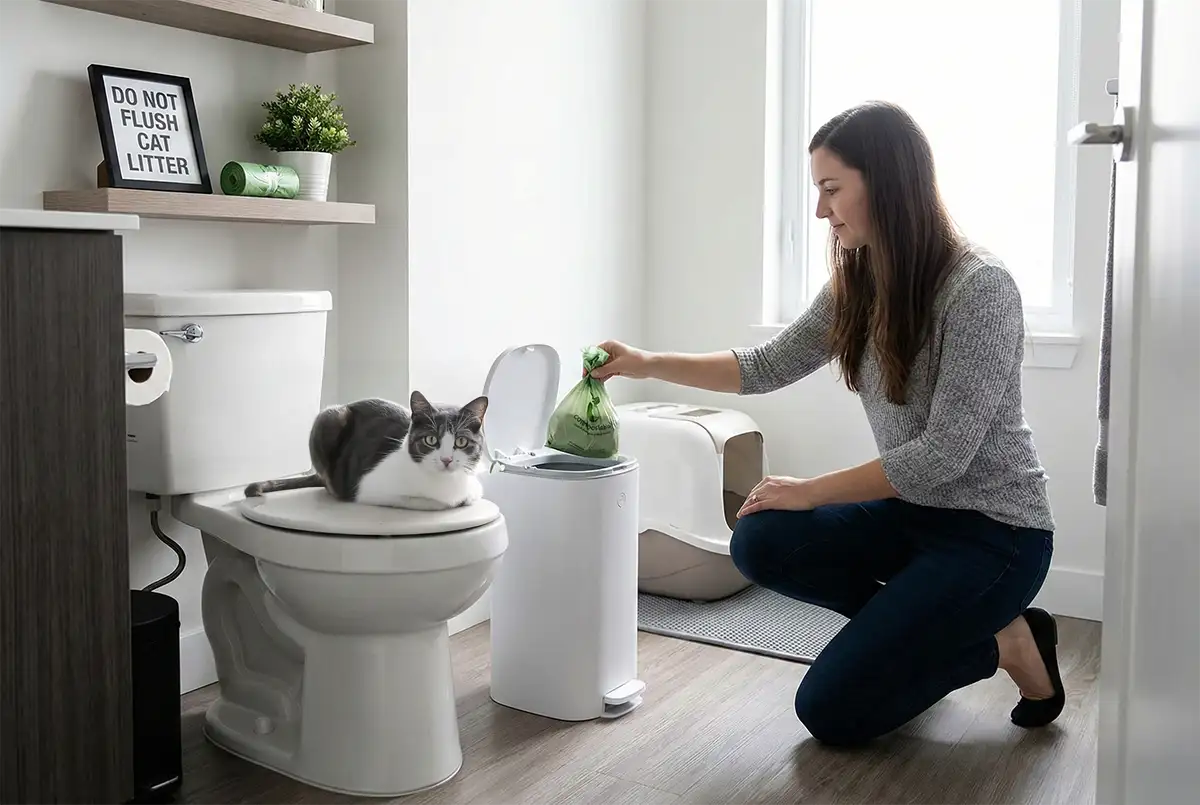
- The Plumbing Risk: Most US apartments, especially in older buildings, have narrow pipes. Traditional clay litter is designed to clump into hard, cement-like balls when wet. If you flush that, it will clog your pipes—guaranteed.
- The “Flushable” Myth: Even litters labeled “flushable” (like corn, wheat, or wood) can clog older systems. Always check your lease agreement; many landlords explicitly forbid flushing any pet waste.
- The Environmental Risk: This is crucial for eco-conscious owners. Sewage treatment plants are designed to handle human waste, not the Toxoplasma gondii parasite often found in cat poop. This parasite can survive the treatment process and flow into oceans, where it is deadly to marine wildlife like sea otters.
Better Alternative: If you hate clay litter, consider switching to wood pellets. They are biodegradable and lighter, making disposal easier. (Read more about this in our guide: [Wood Pellet Cat Litter Pros and Cons]).
4. Composting (Yes, Even in an Apartment)
For the hardcore eco-warriors, throwing biodegradable poop into a landfill feels wrong. While you can’t have a compost pile on your balcony, you do have options.
- Check Local Services: Some progressive cities (like San Francisco or Seattle) allow pet waste in the green municipal compost bin. Check your local sanitation rules.
- Private Pickup Services: In many metro areas, private composting companies offer bucket pickup services specifically for pet waste. They hot-compost it safely to kill pathogens.
- The Bokashi Method: This is an indoor, anaerobic fermentation process. You use a special Bokashi bucket and bran to ferment the waste. It eliminates the smell and breaks down the waste safely, which you can then bury in a friend’s yard or donate to a dedicated compost site (never use it on vegetable gardens!).
5. Controlling Odor in Small Spaces
In an apartment, the litter box is likely in a shared living space like the bathroom or hallway. Keeping the air fresh is non-negotiable.
- Air Purifiers: Place a small HEPA air purifier near the litter box. It traps dust and dander before they spread.
- Charcoal Filters: If you use a covered litter box or a trash bin, tape an activated charcoal filter to the inside of the lid. It absorbs odors like magic.
- Avoid Toxic Sprays: Don’t mask smells with heavy chemical sprays, which can irritate your cat’s lungs. Instead, opt for natural solutions. (Check out our recommendations for [Pet-Safe Air Fresheners]to keep your apartment smelling clean without the toxins).
FAQ: Apartment Litter Etiquette
Q: How often should I empty the entire box in a small apartment?
A: In a small space, you should do a full change-out (dumping all old litter and scrubbing the box) every 2–3 weeks. This prevents that “stale litter” smell from soaking into your carpets.
Q: Is it rude to put cat poop in the building’s trash chute?
A: It is only rude if it smells or explodes! Always double-bag your waste and tie it tightly. If you use heavy clay litter, break it up into smaller bags so you don’t block the chute with a heavy “litter bomb.”
Final Thought
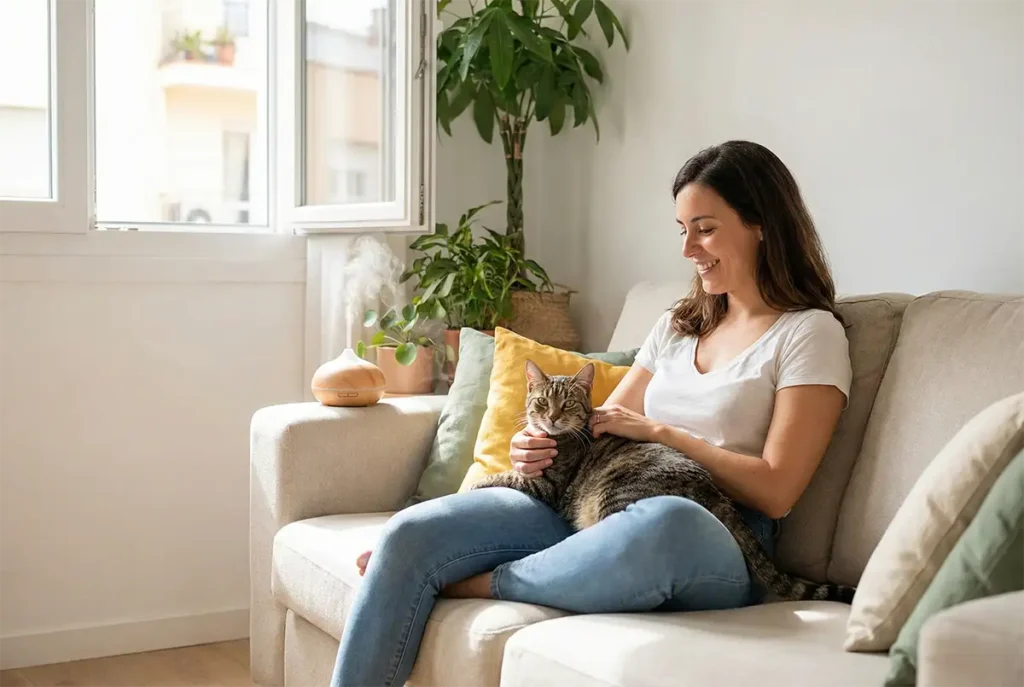
You don’t need a backyard to have a fresh-smelling home. Whether you choose a high-tech disposal pail or stick to the double-bag method, the key is consistency. By creating a routine and using the right tools, you can keep your apartment clean, your landlord happy, and your kitty healthy.
Living in a small space requires smart solutions—start with a better bin today!