We love our pets like family. We buy them the squeakiest toys, the tastiest treats, and the softest beds. We invite them into our homes and hearts, believing that their presence brings us closer to nature. In many ways, they do. Walking a dog forces us to slow down and appreciate the outdoors, and the purr of a cat reminds us of the simple rhythms of life.
But there is an uncomfortable truth lurking in the aisles of your local pet store.
While we diligently separate our recycling, cut down on plastic straws, and bring reusable bags to the grocery store, our pets are often unintended eco-villains. From the industrial farming required to fill their bowls to the millions of tons of clay mined for their litter boxes, the traditional pet industry has a massive—and often overlooked—environmental footprint.
A landmark study by UCLA professor Gregory Okin revealed a shocking statistic that shook the pet industry: In the United States alone, meat consumption by dogs and cats creates about 64 million tons of carbon dioxide annually. To put that in perspective, that is the equivalent climate impact of driving 13.6 million cars for a year.
Does this mean we shouldn’t have pets? Absolutely not.
It simply means it is time to wake up to the hidden costs of pet ownership. The “traditional” way of caring for pets—based on convenience and disposable products—is no longer sustainable. By understanding the “Carbon Pawprint,” we can make smarter, kinder choices that protect the planet without compromising our pets’ happiness.
In this comprehensive guide, we will break down the environmental impact of every aspect of your pet’s life, from the food in their bowl to the waste they leave behind, and offer practical, eco-friendly solutions.
1. The Heavy Cost of the Food Bowl (The Biggest Culprit)
The single biggest contributor to your pet’s carbon footprint is what they eat. While we often focus on plastic packaging, the ingredients inside the bag usually carry a much heavier environmental price tag.
The Meat Dilemma: “Human Grade” vs. Sustainability
Cats are obligate carnivores, and dogs are omnivores that lean heavily on protein. To meet this demand, the pet food industry relies on industrial agriculture. Raising cows, pigs, and chickens requires vast amounts of land, water, and energy.
- Land Use: Massive areas of forests are cleared annually to grow soy and corn to feed livestock, which eventually becomes pet food.
- Methane Emissions: Cows produce methane, a greenhouse gas that is 25 times more potent than CO2 at trapping heat in the atmosphere. Beef production is the primary driver of this.
In the past, pet food was largely made from “by-products”—organs, feet, and meats that humans didn’t want to eat. Paradoxically, this was actually more sustainable because it utilized the whole animal and reduced waste. However, the modern marketing trend of “Human Grade” cuts of meat (like premium steak or chicken breast for dogs) has actually increased the environmental burden. It requires raising more animals specifically for pet consumption, rather than using the leftovers of the human food system.
The Emerging Solution: Insect Protein?
Forward-thinking companies are now looking at alternatives to traditional meat. Insect protein (like crickets and black soldier fly larvae) is gaining massive popularity in the eco-pet world. Insects require a fraction of the water and land that cattle do, and they emit almost no greenhouse gases. While it might sound gross to us, pets love the taste, and it offers a high-quality protein source without the carbon cost.
The Packaging Problem
Take a look at a standard bag of dry kibble. It is usually thick, shiny, and impossible to tear. These bags are made of multi-layered materials—a mix of plastic, foil, and paper fused together to keep fats from going rancid.
Because these layers cannot be separated, 99% of pet food bags are non-recyclable. They go straight to the landfill, where they will sit for centuries. While some companies are experimenting with mono-material bags (recyclable PE), the industry standard remains a significant source of plastic waste.
2. The Dirty Truth About Cat Litter
For cat owners, the litter box is a daily chore. But the environmental cost of that “clump” is arguably one of the most destructive aspects of pet ownership.
Strip Mining for Sodium Bentonite
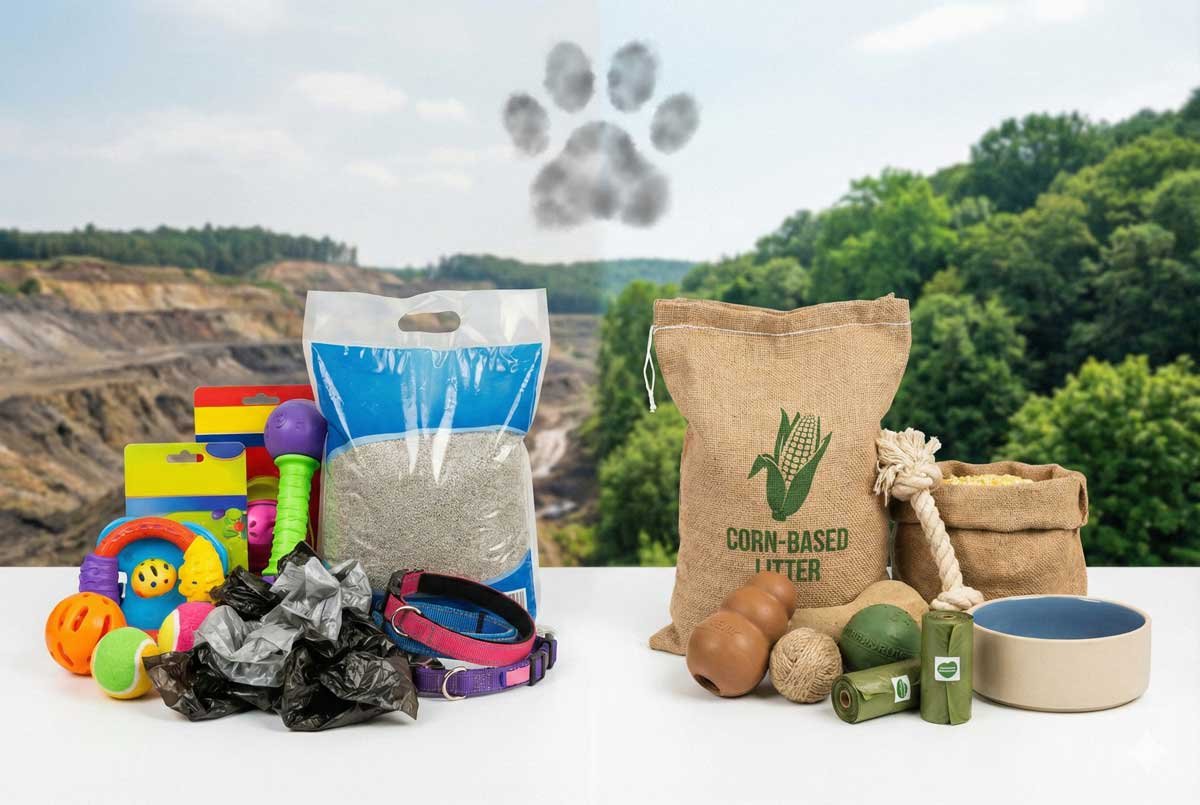
Most traditional clumping cat litters are made from Sodium Bentonite Clay. This clay doesn’t grow on trees; it is mined from the earth. To access this clay, mining companies use a method called “Strip Mining.”
Heavy machinery removes the topsoil, trees, and vegetation from the land to dig up the clay underneath. This process destroys local ecosystems, displaces wildlife, and leaves the land scarred for generations. It creates a massive disturbance for a product that is used for just a few days and then discarded.
The Weight of Transportation
We also have to consider the carbon emissions from shipping. Clay is incredibly heavy. Shipping millions of tons of heavy clay from mines to packaging facilities, and then to retail stores across the country, burns a tremendous amount of fossil fuel. Compared to lightweight alternatives like corn or wood, shipping clay is highly inefficient.
The “Mummy Effect” in Landfills
Even if you switch to a natural litter, how you dispose of it matters. Most Americans scoop the waste into a plastic grocery bag and tie a knot.
As we discussed in our guide on How to dispose of cat litter without plastic bags, wrapping organic waste in plastic preserves it like a mummy. In a landfill, organic matter needs oxygen to break down. Plastic bags seal the waste off from oxygen, causing it to undergo “anaerobic decomposition.” This process releases methane gas instead of turning into soil.
Essentially, by bagging biodegradable poop in plastic, we are turning a natural fertilizer into a long-term pollutant.
3. The Rise of “Pet Fast Fashion” and Plastic Toys
Walk into any big-box pet store, and you are greeted by a wall of bright, colorful plastic toys and seasonal outfits. The “Humanization” of pets has led to a boom in pet accessories, mirroring the problems of the human “Fast Fashion” industry.
The Virgin Plastic Cycle
Most cheap squeaky toys are made from virgin plastic (newly created plastic, not recycled) or PVC. These toys are designed to be destroyed. A dog might chew through a plastic bone in a week, and then it is tossed in the trash. Unlike children’s toys, which are often passed down or donated, pet toys usually have a one-way ticket to the dump.
The Hidden Danger of Microplastics
It isn’t just about waste; it is about health. When your dog or cat chews on a synthetic rope or a plastic bone, they are grinding it down into microplastics.
- Ingestion: Some of these particles are swallowed by your pet. While the long-term effects are still being studied, ingesting plastic is never ideal for gut health.
- Water Contamination: The rest of the plastic bits break off into your carpet. When you vacuum and empty the dust, or wash pet blankets, these microplastics eventually find their way into our water systems and oceans.
Polyester Bedding and Clothing
Check the tag on your pet’s fluffy bed or that cute Halloween sweater. It likely says “100% Polyester” or “Acrylic.” These are plastic-based fabrics derived from petroleum.
Every time you wash a polyester pet bed, it sheds thousands of microfibers into the washing machine water. These fibers are too small for water treatment plants to filter out, so they end up in rivers and oceans, where they are eaten by small aquatic life.
4. Hard Goods: Bowls, Crates, and Carriers
We often overlook the “durable” goods—the plastic crates, the food bowls, and the carriers.
While these aren’t single-use items, they are often made from low-grade, brittle plastics that crack easily. When a plastic carrier cracks, it cannot be repaired; it gets thrown away.
The Eco-Friendly Swap: This is where the concept of “Buy It For Life” comes in.
- Stainless Steel or Ceramic Bowls: These last forever and don’t leach chemicals into the food like plastic bowls can.
- Second-Hand Gear: The most eco-friendly crate is the one that already exists. Buying used gear from Facebook Marketplace or thrift stores prevents new plastic from being manufactured and keeps old items out of the landfill.
5. Chemical Runoff: Shampoos and Flea Control
Keeping our pets clean and pest-free is essential, but the chemicals used in traditional grooming products can be toxic to the environment.
Shampoos and Wipes
Many conventional pet shampoos contain Sulfates, Parabens, and Artificial Fragrances. When you rinse your dog in the bathtub or backyard, these chemicals wash into the soil or the sewage system. In waterways, phosphates from soaps can cause algae blooms that suffocate fish by depleting oxygen levels in the water.
The Flea Collar Risk
Flea and tick treatments are essentially pesticides. While necessary for health, recent studies have shown that the chemicals in some flea collars (like imidacloprid and fipronil) can wash off a dog. If your dog jumps into a river or lake for a swim, these chemicals leach into the water. They are incredibly potent neurotoxins for insects and can decimate local populations of bees, dragonflies, and aquatic invertebrates that are essential for a healthy ecosystem.
6. Practical Swaps: How to Lower the Pawprint
Now that we have uncovered the heavy impact of traditional supplies, let’s focus on the solution. You don’t have to be perfect; you just have to be better. Here are three major areas where you can make a difference today.
Swap 1: Rethink the Litter Box
This is the single most impactful change a cat owner can make. Stop buying clay. Instead, choose litter made from renewable resources like corn, wheat, wood, or recycled paper. These materials are often by-products of other industries (like sawdust from lumber mills), meaning no new land was destroyed to make them.
- Why it helps: These materials are lighter to ship (lower carbon emissions) and fully biodegradable.
- Learn more: If you are unsure which type is best for your cat, read our detailed breakdown of What is Biodegradable Cat Litter Made Of? to find the perfect match.
Swap 2: Responsible Waste Disposal
If you have a garden, you have a superpower. Instead of sending waste to a landfill, you can potentially compost it. Composting returns nutrients to the soil and completely eliminates plastic waste. However, safety is key—cat waste should never be used on edible crops due to parasites like Toxoplasma.
- The Safety Rule: Only compost for decorative plants, rose bushes, and flowers.
- Deep Dive: Before you start, please read the safety protocols in our article Can You Compost Cat Poop? to ensure you don’t spread bacteria.
Swap 3: Conscious Consumption (Toys & Accessories)
Next time you buy a toy, check the label.
- Look for: Hemp, organic cotton, natural rubber, or wool. These materials biodegrade if they are lost outside or thrown away.
- Avoid: Cheap vinyl, seasonal “fast fashion” outfits that will only be worn once, and mystery plastics with strong chemical smells.
- DIY: Often, a cardboard box or a braided rope made from old cotton t-shirts makes a better toy than anything you can buy at the store.
Conclusion: Small Steps for a Greener Future
The goal of pointing out these environmental impacts isn’t to make you feel guilty about owning a pet. The bond we share with our animals is one of the purest things in life, and they bring us immense joy.
However, as the guardians of these animals, we also have a responsibility to be guardians of the land they walk on. The pet industry has operated on “autopilot” for decades, prioritizing cheap production and convenience over sustainability. But as consumers, we have the power to change that.
Every time you choose a bag of corn litter over clay, you are saving a piece of land from mining. Every time you use a biodegradable poop bag (or a newspaper burrito) instead of plastic, you are reducing landfill waste. And every time you buy a durable metal bowl instead of a cheap plastic one, you are voting for a world with less waste.
Let’s make sure that our love for our pets includes love for the world they live in. By reducing their “Carbon Pawprint,” we ensure that future generations—of both humans and pets—have a green, healthy planet to enjoy.