Picture this: You have just switched to an expensive, eco-friendly corn or pine cat litter. You feel great about making a sustainable choice for your feline friend. You scoop the litter box, and then… You throw that biodegradable waste into a standard plastic grocery bag, tie a knot, and toss it in the trash.
It feels a bit contradictory, doesn’t it?
You are not alone in this dilemma. For most American cat owners, the “plastic bag habit” is the hardest one to break. We use them because they are convenient, leak-proof, and good at containing smells. But when you realize that Americans use roughly 100 billion plastic bags a year, and a significant portion of those end up in landfills purely for pet waste, the guilt starts to set in.
If you are ready to make your cat care routine truly zero-waste, you might be asking: “How can I dispose of cat litter without plastic bags without making a mess?”
The good news is that ditching plastic is easier than you think. You don’t have to sacrifice hygiene or deal with terrible odors. In this guide, we will explore 5 practical, clean, and green methods to handle the scoop—plastic-free.
The “Mummy Effect”: Why We Need to Stop Bagging Poop
Before we dive into the solutions, let’s look at why that plastic bag is such a problem.
When you wrap organic waste (like cat poop or biodegradable litter) in a plastic bag, you create what environmentalists call the “Mummy Effect.”
In a landfill, organic matter needs oxygen to break down. Plastic bags seal the waste off from oxygen. Instead of decomposing and returning to the earth in a few months, that biodegradable litter is preserved inside the plastic “tomb” for decades, releasing methane gas—a potent greenhouse gas—in the process.
According to the Environmental Protection Agency (EPA), plastics are a major contributor to municipal solid waste, and they can take hundreds of years to decompose. By simply changing how we throw away litter, we can stop contributing to this massive pile-up.
Method 1: The “Newspaper Burrito” (Free & Effective)
If you are looking for a solution that costs zero dollars and recycles waste you already have, the “Newspaper Burrito” is the classic zero-waste hack.
This method uses old newspapers, junk mail flyers, or packing paper to wrap the waste. Paper is breathable, meaning the waste inside can eventually dry out and decompose properly in a landfill.
How to Master the Fold:
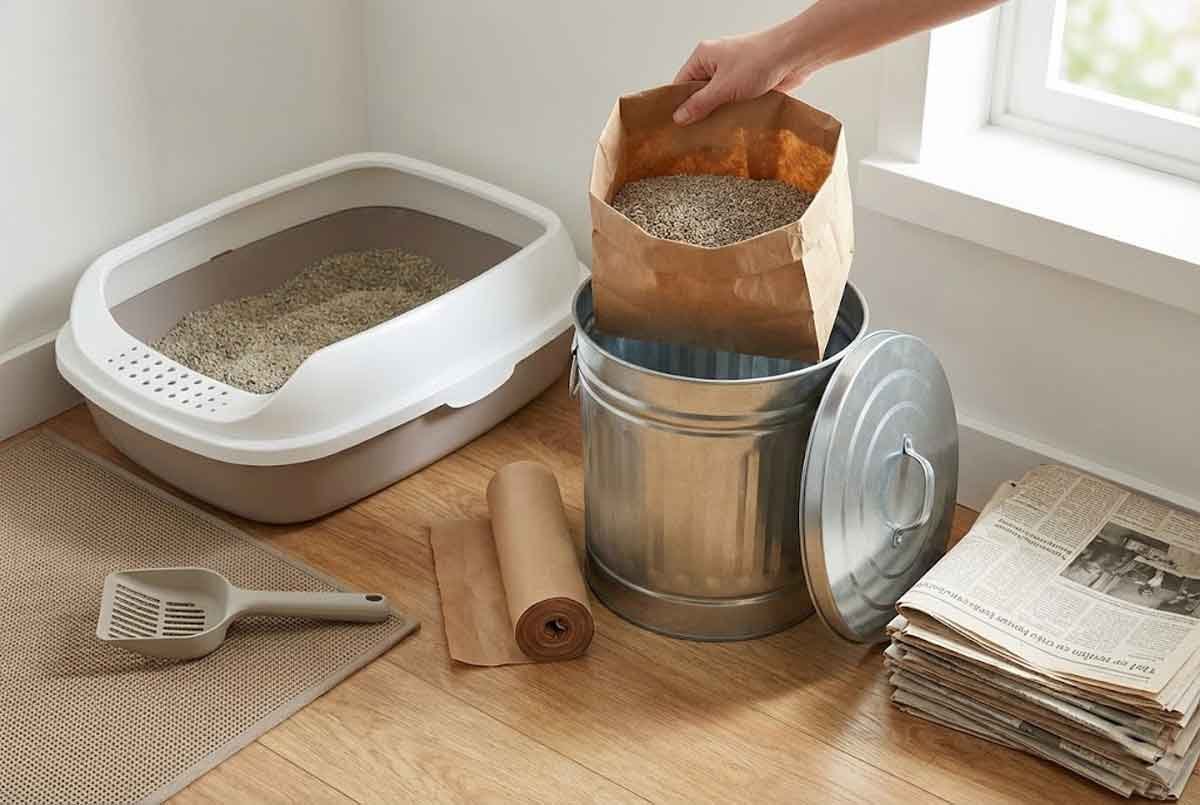
- Preparation: Keep a stack of old newspapers next to your litter box.
- Layer Up: Take 2 to 3 sheets of paper. (Don’t be stingy here—you want enough layers to prevent leaks).
- The Scoop: Place your scooped clumps in the center of the paper.
- The Burrito Fold: Fold the bottom up, the sides in, and then roll it over the remaining top section.
- The Toss: Drop your little paper package directly into your main trash bin.
Pro Tip: This works best if you scoop daily. Smaller clumps are easier to wrap than a week’s worth of waste. Also, ensure your main trash can has a lid to keep any potential odors contained.
Method 2: Brown Paper Lunch Bags (The Easy Swap)
If the idea of folding newspaper origami every morning sounds like too much work, standard brown paper lunch bags (Kraft paper) are your best friend.
You can buy these in bulk at any grocery store for very cheap (usually pennies per bag). They are sturdy, compostable, and hold their shape, making them much easier to fill than a floppy newspaper.
Why This is a Game-Changer:
Paper bags are surprisingly good at odor control. Unlike plastic, which traps smells inside (hitting you in the face when you open the bag), paper allows the litter to breathe and dry out. Dry litter smells significantly less than damp litter.
A Note on Litter Weight: Paper bags are strong, but they have their limits. If you are using heavy clay litter, the bottom of the bag might break. This method works much better if you are using lightweight, natural alternatives. (Not sure which lightweight option to pick? Check out our guide on What is Biodegradable Cat Litter Made Of?to find a lighter, safer substrate.
Method 3: Certified Compostable Bags (Know the Difference)
For many cat parents, the convenience of a bag is non-negotiable. If you aren’t ready to give up the “tie-and-toss” method, you can switch to Certified Compostable Bags.
However, you must be careful. The pet market is flooded with “Greenwashing.”
“Biodegradable” vs. “Compostable”
You will see many green boxes labeled “Biodegradable Plastic.” Avoid these. They are usually just regular plastic with an additive that helps them break down into smaller pieces (microplastics) faster. They are still plastic.
Instead, look for bags labeled “Certified Compostable” (specifically look for the ASTM D6400 certification logo). These are made from plant starches (like corn or vegetable oils) and will truly dissolve into the earth without leaving toxic residue.
Pros:
- Feels just like using a plastic bag.
- Leak-proof and sanitary.
Cons:
- More expensive than plastic or paper.
- They have a shelf life (they will start to disintegrate if stored under your sink for more than a year).
Method 4: Composting (The Ultimate Zero Waste Move)
If you have a backyard, you can skip the trash can entirely. Composting is the gold standard of sustainable pet care. By composting, you turn the waste back into nutrient-rich soil rather than adding to a landfill.
However, this comes with a strict safety warning: Cat waste compost is for flowers and lawns ONLY.
Because cat feces can contain harmful parasites like Toxoplasma gondii, you should never use this compost on your vegetable garden or near edible crops.
How to Start:
You can use a dedicated hot compost bin or a solar digester (like a Green Cone). You simply scoop the poop and the biodegradable litter directly into the compost system. No bags, no paper, no waste.
(This is a deeper topic that requires specific temperatures to be safe. For a step-by-step tutorial on how to set this up safely, read our dedicated article: Can You Compost Cat Poop?).
Method 5: The Bucket System (Direct Disposal)
If you live in an apartment or don’t have access to a garden, the “Bucket System” is a great middle-ground.
Instead of wrapping every single scoop in a small bag, you collect the waste in a larger, dedicated container and empty it once a week.
How It Works:
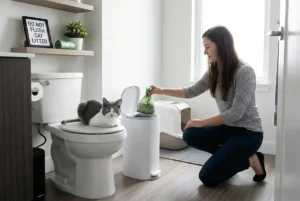
- Get a dedicated pail with a tight-sealing lid (a Diaper Genie or a metal bucket works well).
- Line the bucket with one large paper grocery bag or a large compostable liner.
- Throughout the week, dump your scoops directly into this bucket. The tight lid keeps the smell inside.
- On trash day, pull out the large liner (which is now full) and toss it in your curbside bin.
This reduces your usage from 7 bags a week (one per day) to just 1 bag a week. It is efficient, cleaner, and uses significantly less material.
Crucial Tips to Control Odor Without Plastic
The biggest fear people have about ditching plastic is the smell. Plastic seals odor in; paper lets it breathe. While breathing is good for decomposition, you don’t want your kitchen smelling like a litter box.
Here is how to stay plastic-free and odor-free:
- Use Baking Soda: Sprinkle a layer of baking soda at the bottom of your paper bag or trash bin. It is a natural deodorizer that absorbs smells instantly.
- Use a Metal Bin: If you are tossing paper bags into a main trash can, try to use a metal can with a lid. Plastic trash cans tend to absorb odors over time, becoming smelly themselves. Metal does not.
- Scoop More Often: The longer waste sits in the box, the smellier it gets. If you scoop twice a day, the waste dries out faster in the paper bag and smells less.
Conclusion: Making the Switch
Disposing of cat litter without plastic bags might feel strange for the first week. You might miss the “tie-it-and-forget-it” convenience of the plastic grocery bag.
But once you get into the rhythm of the Newspaper Burrito or the Paper Lunch Bag method, it becomes second nature. You will realize that you don’t need high-tech plastic to handle a very natural process.
By making this one small switch, you are saving hundreds of plastic bags from entering our landfills and oceans every year. It is a small change for you, but a huge win for the planet.
So, which method will you try first? The DIY newspaper fold, or the compostable swap?
(For more tips on handling your cat’s business sustainably, don’t forget to check our full guide on How to Properly Dispose of Eco-friendly Cat Waste).