When you walk into a pet store, it is easy to be drawn to the aisle of cat bowls. They come in bright colors, fun shapes, and—most enticingly—they are often very cheap. It seems like a simple purchase. After all, a bowl is just a bowl, right?
Unfortunately, for many cat owners, this small decision can lead to frustrating health issues for their feline friends and unnecessary waste for the planet.
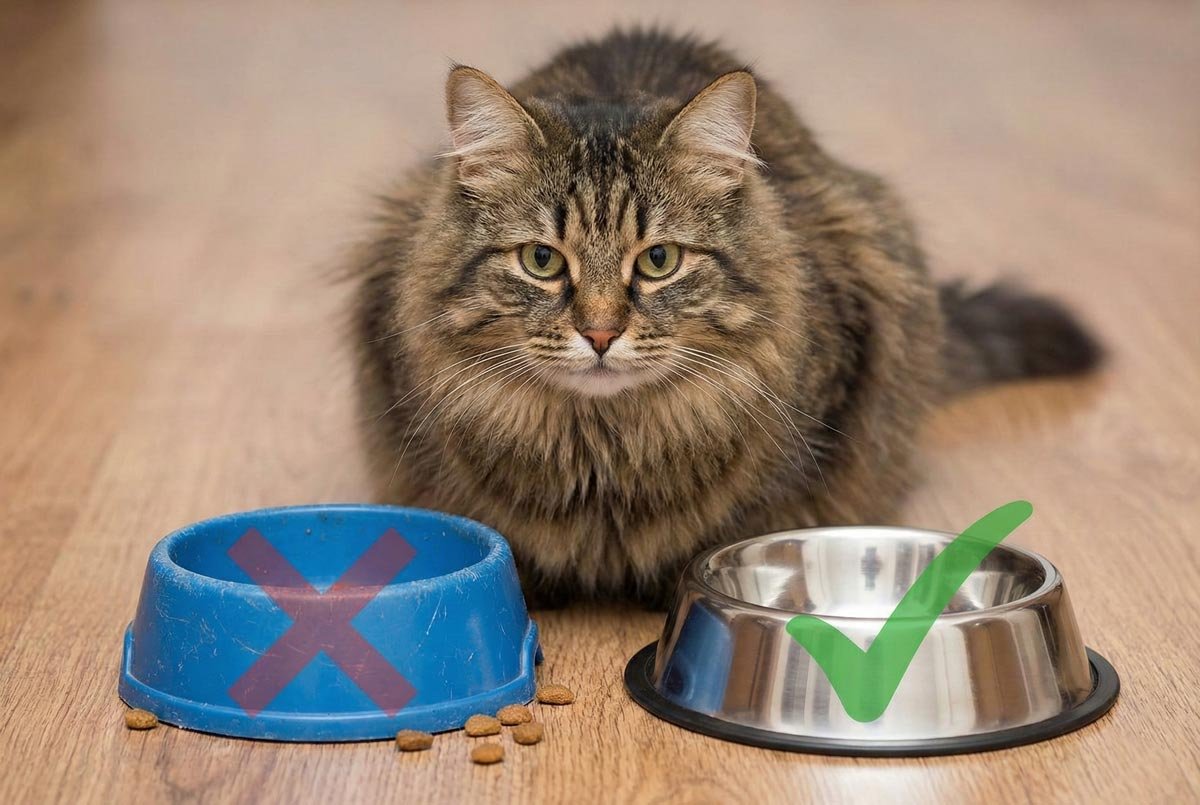
If you have noticed your cat developing black specks on their chin or if you are simply trying to make your home more sustainable, you might be asking yourself: Are plastic bowls bad for cats?
The short answer is: Yes.
While they seem convenient, plastic bowls are often the culprit behind feline health issues like chin acne and bacterial infections. In this guide, we will dive deep into the science of why plastic is problematic, how it affects the environment, and the best eco-friendly alternatives to keep your kitty healthy and safe.
The Top 3 Health Risks of Plastic Bowls
To understand why veterinarians often advise against plastic, we need to look at the material itself. Plastic is not as solid as it looks.
1. They Are Bacterial Breeding Grounds
The biggest problem with plastic is that it is a soft, porous material. Every time you scrub the bowl with a sponge, or every time your cat’s rough tongue licks the bottom to get that last bit of gravy, tiny microscopic scratches (micro-abrasions) are formed.
To the naked eye, the bowl looks clean. But under a microscope, those scratches are like deep canyons where bacteria, mold, and saliva build up.
This buildup creates a biofilm—a slimy layer of bacteria that is incredibly difficult to remove, even with hot soapy water or a run through the dishwasher. When you ask, “are plastic food bowls bad for cats?”, the answer lies in this biofilm. Every time your cat eats, they are ingesting bacteria from their previous meals, which can lead to digestive upset or oral infections.
2. The Leading Cause of Feline Chin Acne
Have you ever noticed small black dots, red bumps, or dirty-looking patches on your cat’s chin? This is likely Feline Chin Acne, a condition that experts at [International Cat Care] link to poor hygiene and the use of plastic food bowls.
Because plastic harbors bacteria in those micro-abrasions, that bacteria transfer to your cat’s chin every time they lower their head to eat or drink. Since cats cannot groom their own chins effectively, the bacteria get trapped in their hair follicles, causing inflammation and acne.
While usually mild, untreated chin acne can turn into painful, swollen boils that require veterinary treatment. Simply switching away from plastic often clears this condition up within weeks.
3. Chemical Leaching (BPA and Phthalates)
Beyond bacteria, there is the issue of chemical composition. Many cheap plastic bowls contain Bisphenol A (BPA) and Phthalates. These are chemicals used to make plastic durable and flexible, but they are known endocrine disruptors.
This is particularly concerning regarding water. Are plastic water bowls bad for cats specifically? Potentially, yes. When plastic heats up (either from the dishwasher, sitting in the sun, or holding warm water), these chemicals can leach into the water. Over time, your cat is ingesting a chemical cocktail that could interfere with their hormonal balance.
The Environmental Cost: Why Plastic Isn’t “EcoPawsible”
At EcoPawsible, we care about your cat’s health and the health of the planet. Even if you find a high-quality, hard plastic bowl, it still fails the sustainability test.
The Landfill Problem
Plastic bowls are not designed to last forever. They crack, fade, and get scratched easily. Once a bowl is too scratched to be safe (usually within 6 to 12 months), it gets thrown in the trash.
Since most pet food bowls are made of mixed plastics or lack recycling codes, they end up in landfills, where they will sit for hundreds of years. By choosing plastic, we contribute to the “disposable culture” that harms our environment.
The Microplastic Threat
As we wash plastic bowls, tiny particles (microplastics) shed off and go down the drain. These eventually make their way into our water systems and oceans, harming marine life. By switching to natural materials, you help reduce the microplastic load in our ecosystem.
(For more on reducing your pet’s environmental impact, read our guide on [Why Switch to Eco-friendly Pet Products?]).
“Is Plastic Bowls Bad for Cats?” – Debunking the Myths
We often get questions from new owners trying to navigate the conflicting advice online. One of the most frequent (and grammatically curious) search queries we see is: “is plastic bowls bad for cats really a fact, or just a marketing scare tactic?”
Let’s debunk a few myths surrounding this question:
- Myth: “My plastic bowl says BPA-Free, so it’s safe.”
- Fact: While “BPA-Free” is better, it doesn’t solve the scratch and bacteria problem. The porous nature of the material remains the same, regardless of the BPA content.
- Myth: “I wash it every day, so it’s clean.”
- Fact: You cannot scrub away bacteria hidden inside deep micro-scratches. In fact, scrubbing hard with abrasive sponges only creates more scratches for bacteria to hide in.
The Best Eco-Friendly & Safe Alternatives
If you are ready to toss the plastic, what should you use instead? Here are the best materials that are safe for your cat and better for the Earth.
1. Stainless Steel (The Gold Standard)
If you want durability and hygiene, stainless steel is the winner.
- Why it’s great: It is non-porous, meaning bacteria cannot hide anywhere. It is unbreakable, dishwasher safe, and lasts a lifetime.
- Eco-factor: Because you never need to replace it, it produces zero waste. Plus, steel is 100% recyclable.
- Pro Tip: Look for “Food Grade #304 Stainless Steel” to ensure it doesn’t rust.
2. Ceramic (Heavy & Hygienic)
Ceramic bowls are a favorite for owners who want something stylish and heavy.
- Why it’s great: The weight prevents cats from pushing the bowl around while eating. Like steel, glazed ceramic is non-porous and easy to clean.
- Eco-factor: Ceramic is a natural material (clay) and doesn’t release microplastics.
- Warning: Ensure the glaze is lead-free and certified food-safe. If the bowl cracks or chips, throw it away immediately, as bacteria can grow in the exposed clay.
3. Bamboo & Plant-Based Fiber (The Sustainable Choice)
For the true eco-warrior, bowls made from bamboo fiber or rice husks are gaining popularity.
- Why it’s great: These are often biodegradable and made from renewable resources. They offer the lightweight feel of plastic without the toxins.
- Eco-factor: Low carbon footprint during production.
- Warning: Make sure the binder used is safe and melamine-free.
(Check out our article on [Natural Fiber Cat Toys] to see how else plant materials can benefit your cat!)
How to Keep Your Cat’s Bowl Germ-Free
Even with the best ceramic or steel bowl, hygiene habits matter. Here is how to ensure your cat isn’t eating bacteria with their dinner:
- Wash Daily, Don’t Just Refill: Many owners just top off the dry food or water. Instead, wash the bowl with hot, soapy water every single day. This prevents the buildup of saliva and dust.
- Separate Food and Water: Cats instinctively prefer not to drink water near their kill (food). Keeping the water bowl in a different location encourages them to drink more and keeps the water cleaner.
- Inspect Regularly: Even steel can get dented and ceramic can chip. Check your bowls monthly. If there is damage, replace them to prevent injury to your cat’s tongue.
Frequently Asked Questions (FAQs)
Q: Can plastic bowls really cause feline acne? A: Yes. The bacteria trapped in the scratches of plastic bowls transfer to your cat’s chin, clogging hair follicles and causing acne. Switching to stainless steel is often the first cure vets recommend.
Q: Are plastic water bowls bad for cats if I change the water often? A: Yes, they can still be problematic. Even with fresh water, the plastic bowl itself can harbor biofilm on the sides, affecting the taste and quality of the water, which might discourage your cat from drinking enough.
Q: Is silicone safe for cats? A: Food-grade silicone is generally safer than hard plastic because it is non-toxic and heat-resistant. However, it can retain food odors, which might make picky cats turn their noses up at their dinner.
Conclusion: Make the Switch Today
So, are plastic bowls bad for cats? When you weigh the risks of bacteria, chin acne, and chemical leaching against the low cost of plastic, the answer is clear. Plastic simply isn’t worth the risk.
By switching to a stainless steel, ceramic, or eco-friendly bamboo bowl, you are making a small change that has a huge impact on your cat’s health. Plus, you are taking one more step toward a plastic-free, sustainable home.
Your cat gives you endless love (and head boops)—they deserve a meal served in a dish that is as safe and clean as possible.
Have you noticed your cat struggling with chin acne? Are you planning to ditch the plastic? Let us know in the comments below!
Disclaimer: This article provides general information and is not a substitute for professional veterinary advice. If your cat has severe acne or skin infections, please consult your veterinarian.