We love our cats for their purrs, head boops, and playful antics. What we don’t love? The litter box duty. It is the unglamorous reality of pet parenthood. But for the eco-conscious owner, this daily chore comes with a heavy dose of guilt.
Every time you scoop that clump of clay litter into a plastic bag and toss it in the trash, you are contributing to a massive environmental problem. In the United States alone, millions of tons of cat litter end up in landfills every year. Traditional clay litter, which is strip-mined from the earth, never decomposes. It sits there, preserved in plastic, for centuries.
But it doesn’t have to be this way.
This comprehensive guide will walk you through the Eco-Friendly Pet Waste Management revolution. We will debunk myths about “flushable” litter, explore the science of composting, and give you a step-by-step plan to reduce your cat’s carbon “pawprint” without sacrificing hygiene or convenience.
The Hidden Cost of the “Scoop and Toss” Routine
Before we dive into solutions, we need to understand the problem. The standard method of cat waste disposal involves three environmentally damaging components:
- Sodium Bentonite Clay: This is the main ingredient in most clumping litters. It is obtained through strip mining, a process that destroys topsoil and local ecosystems. Once in a landfill, clay acts like a concrete slab, taking up space forever.
- Plastic Waste: Most owners use standard plastic grocery bags or nappy sacks to dispose of waste. These bags can take up to 1,000 years to degrade, releasing microplastics into the soil.
- Toxins: Cat waste contains pathogens and bacteria. When sealed in plastic and buried in anaerobic (oxygen-free) landfill conditions, it produces methane—a greenhouse gas far more potent than carbon dioxide.
Step 1: The Foundation – Switching to Biodegradable Litter
You cannot have an eco-friendly waste management system if you are starting with non-biodegradable material. If you are still using clay or silica gel litter, the first step is to switch.
Why Clay is Out:
- Non-Renewable: It is mined, not grown.
- Dusty: Contains silica dust which is a carcinogen.
- Heavy: Increases the carbon footprint of transportation.
What to Use Instead: Look for litters made from plant-based, renewable resources. These materials can return to the earth naturally:
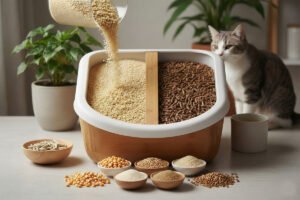
- Corn & Wheat: Excellent clumping, compostable.
- Pine & Wood: Natural odor control, often made from lumber byproducts.
- Grass Seed: Highly renewable, lightweight.
- Tofu (Soy): Dissolves easily, low dust.
- Recycled Paper: Zero waste, utilizing post-consumer paper.
Check out our previous guide on [What is Biodegradable Cat Litter Made Of?] for a deep dive into these materials.
Step 2: The “Flushable” Myth – Why Your Toilet is NOT the Answer
This is the most common misconception in eco-friendly pet care. Many brands label their natural litter as “Flushable.” While it is technically true that corn or wheat litter can break down in water pipes, flushing cat waste is a major environmental hazard.
The Toxoplasmosis Connection
Cat feces can contain a parasite called Toxoplasma gondii. This parasite is hardy and resistant to the standard chemical treatments used in municipal water processing plants.
When you flush cat waste:
- The water travels to the treatment plant.
- The Toxoplasma parasite survives the treatment.
- The water is released into rivers and oceans.
- Marine Wildlife Suffers: This parasite is deadly to marine mammals, specifically Sea Otters and Monk Seals. It causes brain inflammation and death in these endangered species.
The Verdict: Unless you have a specific, self-contained septic system designed for pets (which is rare), NEVER flush cat poop. It is simply not worth the risk to our aquatic ecosystems.
Step 3: How to Dispose of Eco-friendly Cat Waste Responsibly
So, if you can’t flush it, what should you do? Here are the best methods, ranked from most eco-friendly to least.
Method A: Composting (The Holy Grail)
Composting is the gold standard of waste reduction. It turns waste into nutrient-rich soil. However, composting carnivore waste (meat-eaters like cats) is different from composting vegetable peels.
The Golden Rule: Never use cat waste compost on edible crops (vegetables, herbs, fruits). Only use it for ornamental plants, flowers, or lawns.
How to Compost Cat Litter Safely:
- Separate the Solids: Some experts recommend scooping out the solid feces and tossing them (to reduce pathogen risk), while composting the urine-soaked clumps.
- High Heat is Key: To kill pathogens like E. coli and Toxoplasma, your compost pile needs to reach a temperature of at least 145°F (62°C) for several days. Most backyard cold compost bins do not get this hot.
- Use a Dedicated Bin: Do not mix pet waste with your kitchen compost. Buy a dedicated “Pet Waste Composter” (like a digester system) that is buried in the ground. These systems use enzymes to break down waste safely back into the subsoil.
Note: If you are using a commercial composting service, check if they accept pet waste. Most municipal “green bins” DO NOT allow pet waste.
Method B: The “Green” Trash Method (Most Practical)
For 90% of pet owners, this is the most realistic option. It involves sending waste to the landfill but minimizing the impact significantly.
The Strategy:
- Use Biodegradable Bags: Swap your plastic grocery bags for certified compostable bags (look for ASTM D6400 or EN 13432 certifications). Even if they end up in a landfill, they break down faster than traditional plastic.
- Paper Bags: An even better option is using small paper lunch bags. Paper is natural and decomposes easily without leaving microplastics.
- Scoop Daily: Frequent scooping keeps the air in your home clean without chemical sprays.
- The “Bulk” Toss: Instead of using one bag per day, collect clumps in a larger, sealed container (like a Litter Genie or a dedicated bin with a charcoal filter) lined with a large biodegradable bag. Empty this larger bag once a week. This uses significantly less plastic overall.
Method C: Burying (For Rural Homes)
If you have a large backyard away from water sources, burying is an option.
- Dig a hole at least 12 inches deep.
- Ensure it is far away from vegetable gardens and groundwater sources (wells/streams).
- Bury the biodegradable litter and waste. The soil microorganisms will break it down over time.
Step 4: Eco-Friendly Accessories & Cleaning
Waste management isn’t just about the litter; it’s about the tools you use.
1. The Litter Box
- Plastic Problem: Most litter boxes are made of cheap plastic that absorbs odors over time, forcing you to throw them away every year.
- Eco Solution: Invest in a Stainless Steel or Bamboo-resin litter box. Stainless steel never absorbs odors, is easy to sanitize, and lasts a lifetime. If you must use plastic, buy a high-quality, durable one made from recycled materials.
2. The Scoop
- Avoid: Flimsy plastic scoops that break easily.
- Choose: A solid Metal Scoop. It cuts through clumps better, doesn’t harbor bacteria, and will likely outlive the cat!
3. Cleaning Products
- Avoid: Bleach and ammonia. Ammonia mimics the smell of cat urine, which might actually encourage your cat to pee outside the box! Plus, these chemicals are harsh on the environment.
- Choose:
- Vinegar & Water: A 50/50 mix is a powerful, natural disinfectant.
- Enzyme Cleaners: These use natural bio-enzymes to “eat” the odor-causing bacteria rather than masking it.
- Castile Soap: Gentle, plant-based, and effective.
Frequently Asked Questions (FAQ)
Q: Can I put biodegradable litter in my garden? A: You can use the litter (sawdust/corn) as mulch for non-edible plants only if it hasn’t been used. Once it contains cat waste, it must be composted properly or buried away from food crops due to bacterial risks.
Q: Are biodegradable poop bags really better if they go to a landfill? A: Yes. While landfills are anaerobic (lacking oxygen) which slows down decomposition, a plant-based bag is still a better alternative to a petroleum-based plastic bag that will exist for centuries.
Q: My cat is strictly indoors. Do I still need to worry about Toxoplasmosis? A: Yes. While outdoor cats are at higher risk, indoor cats can still carry the parasite (usually from eating raw meat or pests). It is safer to assume the risk exists and avoid flushing.
Conclusion: Progress Over Perfection
Transitioning to an eco-friendly waste management routine doesn’t have to happen overnight. Start by switching the litter. Then, upgrade your bags. Finally, consider a composter.
By moving away from clay and plastic, you are preventing hundreds of pounds of non-degradable waste from entering our environment. You are protecting marine life from harmful parasites. And you are creating a healthier, chemical-free home for your beloved pet.
At EcoPawsible, we believe that small changes in the litter box can lead to big changes for the planet.