Every cat owner knows the drill: scoop, bag, toss, repeat. But have you ever stopped to wonder what exactly is in that heavy bag of litter you lug home every month?
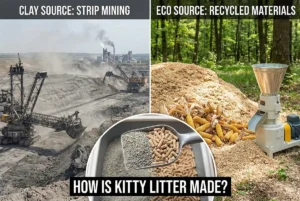
For years, the default choice has been clay (sodium bentonite). While it clumps well, it is strip-mined from the earth and sits in landfills for centuries. Thankfully, the pet industry has evolved. Today’s biodegradable litters aren’t just “eco-friendly“—they are high-tech, plant-based formulas designed to out-perform traditional clay.
If you are ready to ditch the dust and chemicals, here is a deep dive into what biodegradable cat litter is actually made of and how it works.
1. Corn: The Clumping King
Corn-based litter is widely considered the best alternative for owners who love hard clumps.
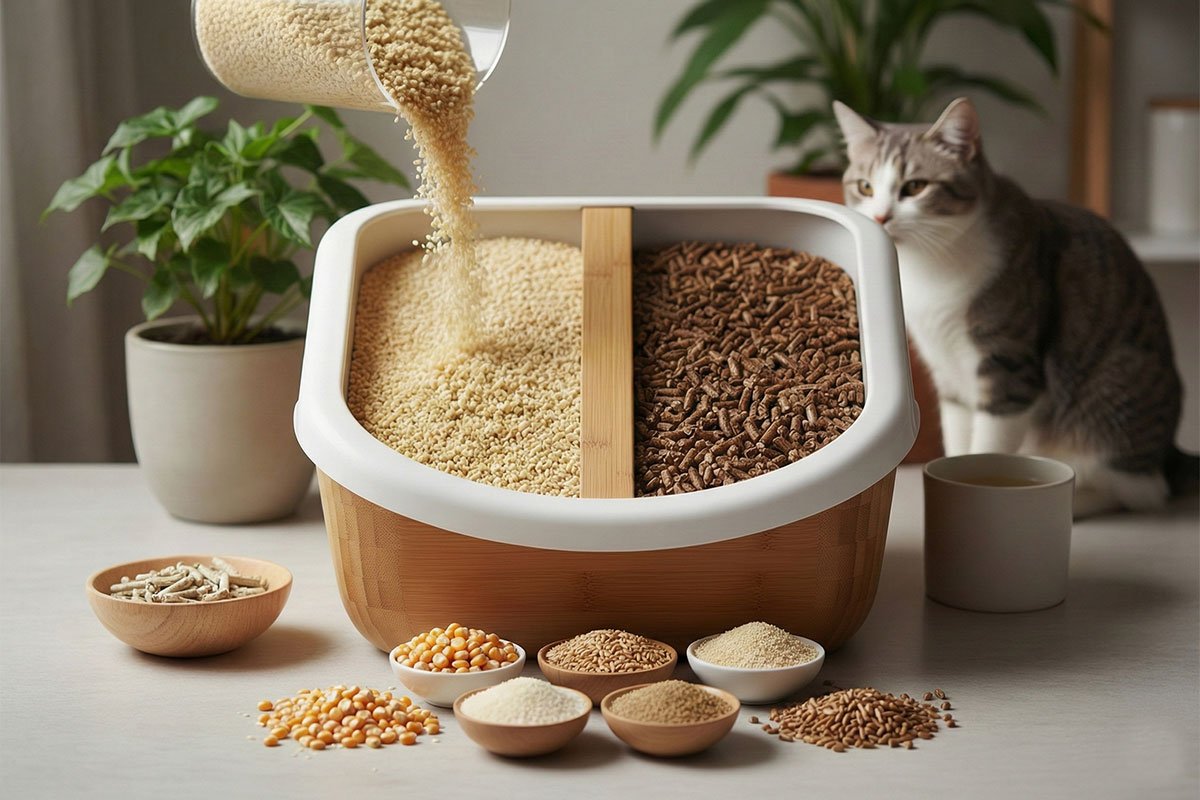
- The Science: Manufacturers use compressed corn kernels or cobs. The natural starches in corn act like a sponge, instantly absorbing liquid and trapping ammonia.
- Why choose it: It offers the tightest clumping action among natural litters, making the transition from clay seamless.
- Expert Note: Since it is food-based, keep the box clean to prevent mold growth in humid climates.
2. Wood & Pine: The Natural Odor Eater
Forget artificial “ocean breeze” scents. Pine litter uses the power of nature to neutralize smells.
- The Science: Made from kiln-dried wood shavings or sawdust (often reclaimed from lumber yards). The “kiln-drying” process is crucial—it removes oils (phenols) that can be toxic to cats, making it 100% safe.
- Why choose it: Pine naturally kills bacteria and has a fresh, woodsy scent. It is also incredibly lightweight.
- Texture: It usually comes in pellets, which turn into sawdust when wet. Some cats may need time to adjust to the feeling of pellets under their paws.
3. Tofu (Soybean): The Modern Favorite
Tofu litter is currently taking the market by storm, especially in modern apartments.
- The Science: It is made from the insoluble parts of soybeans (okara) leftover from tofu production. These fibers are mixed with food-grade starch to create long, thin pellets.
- Why choose it: It is virtually dust-free (goodbye, dusty paw prints!) and doesn’t track all over the house. Plus, it dissolves almost instantly in water.
4. Wheat: The Softer Touch
Wheat litter is made from secondary-grade wheat that isn’t used for human food.
- The Science: Wheat contains natural enzymes that break down odors on a molecular level rather than just masking them.
- Why choose it: The texture is very similar to clay but much softer. It is a fantastic option for kittens or cats with sensitive paws.
- Allergy Alert: If you or your cat have a known gluten allergy, you might want to skip this one.
5. Recycled Paper: The “Recovery” Choice
Made from post-consumer newspaper processed into non-clumping pellets.
- Why choose it: It is the most absorbent option and has zero dust. Vets often recommend paper litter for cats recovering from surgery because there are no fine granules to irritate healing wounds.
The “Flushable” Myth: A Critical Warning
Many biodegradable litters claim to be “flushable,” but most experts advise against it.
- The Risk: Even if the litter breaks down, cat waste can contain a parasite called Toxoplasma gondii. Most municipal water treatment plants cannot filter this out, meaning it can end up in oceans and harm marine wildlife (especially sea otters).
- Our Advice: For the safety of your plumbing and the planet, it is always best to bag it and compost it (for non-edible gardens) or toss it in the trash. For a detailed step-by-step guide, read our article on [How to Properly Dispose of Eco-friendly Cat Waste]
Quick Comparison Guide
| Material | Clumping Power | Odor Control | Dust Level | Best For |
| Corn | ⭐⭐⭐⭐⭐ | High | Low | Clay-lovers |
| Pine | ⭐⭐ (Pellets) | Very High | Very Low | Odor control |
| Tofu | ⭐⭐⭐⭐ | Medium | Zero | Apartments |
| Wheat | ⭐⭐⭐ | Good | Low | Sensitive paws |
| Paper | ⭐ (None) | Fair | Zero | Kittens/Surgery |
Final Thoughts
Choosing the right material often comes down to your cat’s preference. Some cats love the earthy feel of corn, while others prefer the clean pellets of tofu. The good news? No matter which one you pick, you are making a massive difference by keeping non-biodegradable clay out of our landfills.